10% Off Retail prices for our premium value mini excavators

Compact Excavator: The Ultimate Digging
Discover why compact excavators are the ultimate digging machines. Learn about their power, versatility, and efficiency for any construction or landscaping project.
COMPACT MINI EXCAVATORS
11/7/20256 min read
Compact Excavator: The Ultimate Digging Machine
In the dynamic world of construction, efficiency, precision, and versatility are paramount. Every project, whether a sprawling commercial development or a meticulous landscaping endeavor, demands equipment that can rise to the challenge. Enter the Compact Excavator – a marvel of engineering that has revolutionized the way we approach digging, trenching, and demolition tasks.
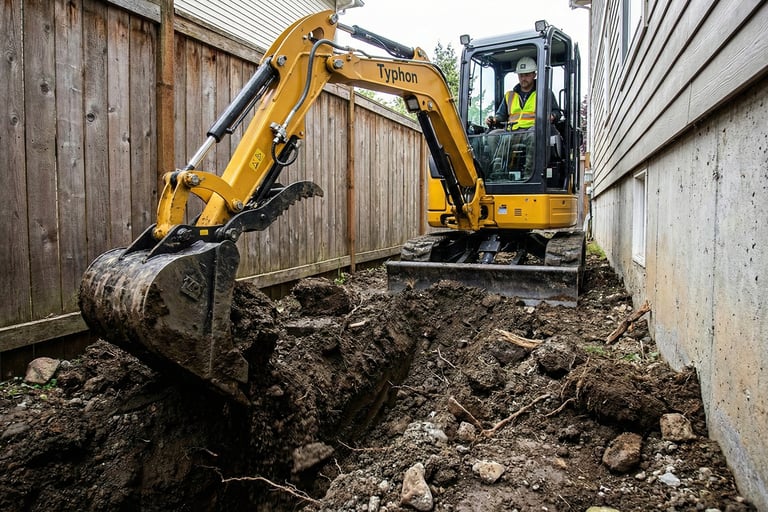
For professionals who demand top-tier performance and reliability, Typhon Machinery’s range of compact excavators stands out as the ultimate digging companion.
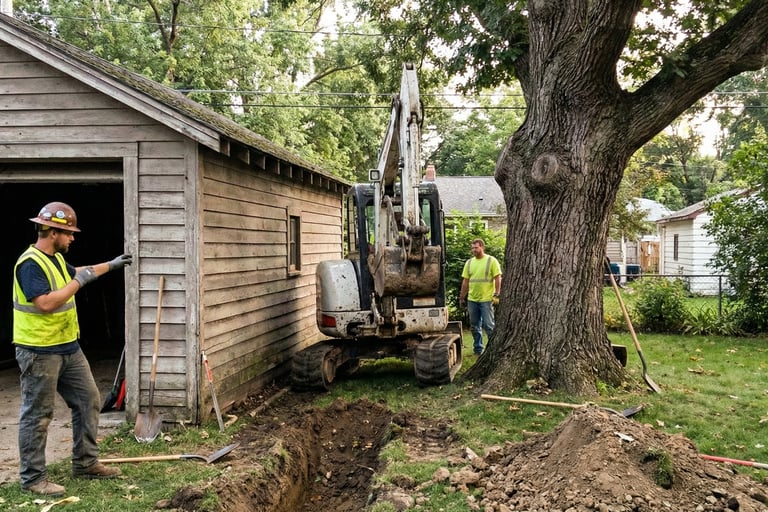
My trusty, standard 20-ton excavator was parked on the street, looking useless. It might as well have been a cruise ship trying to dock in a marina slip. It was too wide, too heavy, and its tail swing would have taken out the garage siding on the first turn.
That was the day I rented my first true compact excavator. That little machine didn't just save the job; it changed my entire perspective on how we approach groundwork.
For decades, the mentality in construction was "bigger is better." If you needed to dig a hole, you brought the biggest machine you could afford to haul. But the world is getting smaller. Job sites are tighter. Urban infill projects are the norm. And frankly, clients are getting pickier about ground disturbance.
This is where the compact excavator—often called a mini excavator—stops being a "nice-to-have" toy and becomes the ultimate, essential digging machine. If you’re still questioning whether these mighty minis can hang with the big boys, pull up a chair. We need to talk shop.
What Do We Mean By "Compact" Anyway?
In the industry, definitions get a little blurry depending on who you ask, but generally, when we talk about a compact excavator, we are looking at machines weighing in under six metric tons (roughly 13,000 lbs).
They look just like their massive counterparts—boom, stick, bucket, cab, and tracks—but scaled down. However, thinking of them merely as "shrunken" excavators does them a disservice. They are engineered specifically for a different set of challenges.
A standard construction excavator is built for bulk earthmoving in open fields. A compact construction excavator is built for surgical precision in a china shop.
The evolution of these machines has been incredible to watch. Twenty years ago, a mini-ex was often underpowered and jerky. You’d feel like you were wrestling a bobcat just to grade a smooth trench. Today? The hydraulics are silk-smooth, the breakout forces are shocking for their size, and the cabs are more comfortable than my pickup truck.
The Real-World Advantages: Why They Rule the Job Site
I’ve spent thousands of hours in various cabs, and the shift toward compact equipment isn't just a trend; it’s a necessity born from practical site constraints. Here is why these machines are taking over.
1. The "Squeeze Factor" (Access is Everything)
Let’s go back to that backyard sewer job. The biggest advantage of a compact excavator is simply getting it to the dirt.
You can squeeze models with retractable tracks through standard garden gates or doorways. Try doing that with a backhoe loader. Furthermore, once you are in that tight space, you need to be able to move.
This brought about the revolution of "Zero Tail Swing" or "Minimal Tail Swing" designs. This means the house of the excavator doesn't rotate much (or at all) beyond the width of tracks.
Practical insight: If you are working next to a brick foundation or a busy lane of traffic, zero tail swing means you don't have to constantly worry about swinging the rear counterweight into an obstacle. You can focus entirely on the bucket. It reduces operator stress immensely.
2. Punching Above Their Weight Class
Don't let the size fool you. The engineering goal of modern compact machines is to maximize hydraulic efficiency.
In my experience, a well-built 3.5-ton machine has incredible breakout force—the power exerted by the curling of the bucket to slice through tough ground. I’ve used compacts to rip through heavy clay and pop out decent-sized tree stumps that I thought for sure would require a larger dozer.
It’s about the power-to-weight ratio. Because they are lighter, they also do less damage to the ground they drive on. If you are working on a finished lawn or a paved driveway, a compact machine with rubber tracks is vastly preferred over a heavy steel-tracked beast that will chew up the surface just by turning around.
3. The Logistics of Transport
This is a huge factor for owner-operators and smaller contracting firms.
Moving a 30-ton excavator requires a dedicated lowboy trailer, permits, sometimes escort vehicles, and significant fuel costs.
A compact excavator? Often, you can tow a 3-ton or 4-ton machine behind a stout ¾-ton or 1-ton pickup truck on a standard equipment trailer (always check your specific towing capacity and local DOT regulations, of course).
The ability to hook up the trailer at 7:00 AM, drive to the site, do the dig, and have the machine back in the yard by 5:00 PM is a game-changer for profitability. You aren't waiting on expensive external haulers.
The Secret Sauce: It’s Not Just About Digging Anymore
If you only use your mini ex for digging holes, you’re leaving money on the table. The true power of the modern compact construction excavator lies in its role as a "tool carrier."
Thanks to auxiliary hydraulics—the extra hydraulic lines running down the boom—and quick-coupler systems, you can swap attachments in seconds without leaving the cab.
The Thumb: In my opinion, a hydraulic thumb is mandatory. It turns your bucket into a grapple. Suddenly you aren't just digging dirt; you're placing armor stone, pulling stubborn brush, or neatly stacking demolition debris.
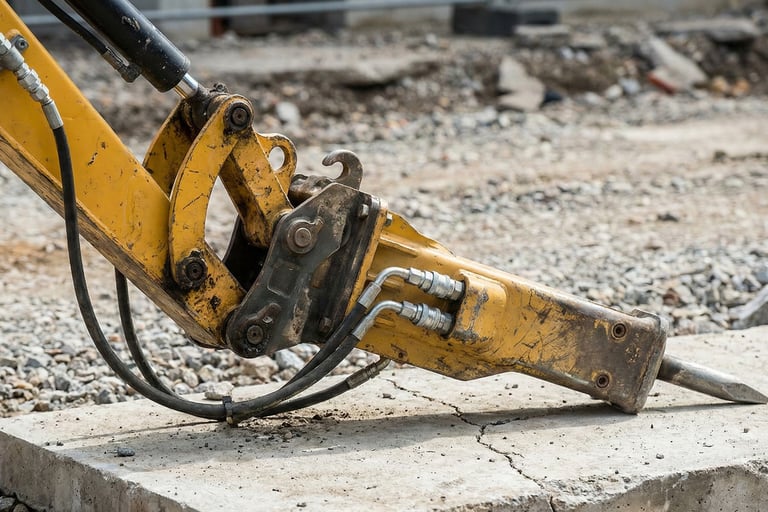
The Breaker: Need to remove an old concrete patio before digging the new footings? Pop on the hydraulic hammer, smash the concrete, switch back to the bucket, and load it out. One machine, two jobs.
The Auger: Fence posts, deck piers, tree planting. An auger attachment on a mini ex is faster and more precise than a two-man handheld auger any day of the week.
A Spotlight on Typhon Machinery
I’ve operated Cats, Kubota, Deeres, and Bobcats. They all make good iron. But lately, I’ve been keeping a close eye on Typhon Machinery.
When a newer player enters the market, I’m usually skeptical. But what interests me about Typhon’s approach to the excavator market is their focus on the essentials without the "fluff" that drives up prices.
In chatting with guys who run Typhon equipment, a few things stand out that speak to practical, real-world use:
1. Reliable Powertrains: They tend to use proven, recognizable engines (like Yanmar or Kubota powerplants in many models). As a mechanic myself, knowing I can get parts for the engine block easily matters a lot for long-term trustworthiness.
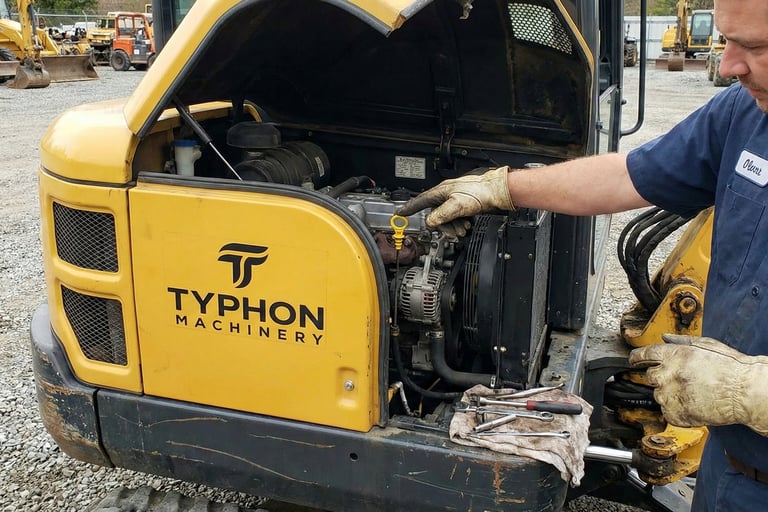
2. Maintenance Access: This is huge. Some major brands design machines where you need to be a contortionist just to check the hydraulic fluid or change an oil filter. Typhon seems to design their engine bays with actual human hands in mind. If it's easy to service, it gets serviced. If it's hard to service, it gets neglected and breaks.
3. The Operator Station: You’re going to spend 8 hours a day in that seat. Typhon has focused on making their cabs comfortable and, crucially, the controls intuitive. Pilot controls that are responsive without being twitchy reduce fatigue.
Typhon Machinery seems to understand that a compact excavator needs to be a reliable workhorse first, and a technological marvel second. They offer a solid balance of performance and value that is becoming very attractive to contractors watching their bottom line.
Final Thoughts: The Indispensable Partner
The construction landscape has changed. Speed, efficiency, and the ability to work in confined spaces are now the metrics of success.
While there will always be a need for massive earthmovers to build highways and skyscrapers, the compact excavator has cemented its place as the ultimate digging machine for the vast majority of utility, residential, and light commercial projects.
It’s the Swiss Army knife of the job site. Whether you’re a seasoned contractor looking to augment your fleet, or an ambitious homeowner with a massive weekend project, don't underestimate what these machines can do. They might be small, but they changed the way the world digs.
TinyExcavator
Find mini excavator suppliers with reasonable prices and variety.
TYPHON Machinery Offices
2522 S Malt Ave. Commerce, CA 90040 United States
© 2025. All rights reserved.