10% Off Retail prices for our premium value mini excavators
Why Every Small Contractor Should Own a Mini Excavator
For a small contractor, every piece of equipment has to earn its place. Space is limited, budgets are tight, and machines that sit idle drain profit fast.
TYPHON
7/12/20266 min read
Conclusion
Every contractor has a few jobs that seem to consume more time, equipment, and labor than they should. In many cases, the solution isn't adding another machine. It's getting more capability from the one you already own. A mini excavator equipped for multiple applications can take on work that would otherwise require extra rentals, subcontractors, or separate pieces of equipment, making it easier to keep projects moving from start to finish.
As your workload evolves, your equipment should be able to evolve with it. Choosing a mini excavator with the right specifications and attachment options gives you the flexibility to take on a wider variety of projects without constantly changing your fleet. The result is a machine that continues to meet new challenges, supports business growth, and remains a dependable part of your operation for years to come.
Frequently Asked Questions
How much can a mini excavator lift?
Lifting capacity depends on the machine's size, attachment, and operating position. Compact models are designed to safely handle light to medium loads, but operators should always follow the manufacturer's rated lifting capacity to maintain stability and prevent tipping.
Can a mini excavator work in confined spaces?
Yes. One of the biggest advantages of mini excavators is their compact size, which allows them to work in backyards, between buildings, inside barns, and other restricted areas where larger equipment cannot operate efficiently.
How do I choose the right attachment for a mini excavator?
The best attachment depends on the job. Buckets are ideal for digging and trenching, augers simplify post hole drilling, hydraulic thumbs improve material handling, and grading buckets help create smooth, level surfaces. Selecting the correct attachment increases both productivity and job quality.
What should I inspect before operating a mini excavator?
Before starting work, inspect the machine for fluid leaks, check engine oil and coolant levels, examine the tracks for wear or damage, verify that hydraulic hoses are in good condition, and test all controls and safety features. A thorough pre-operation inspection helps reduce downtime and improves jobsite safety.
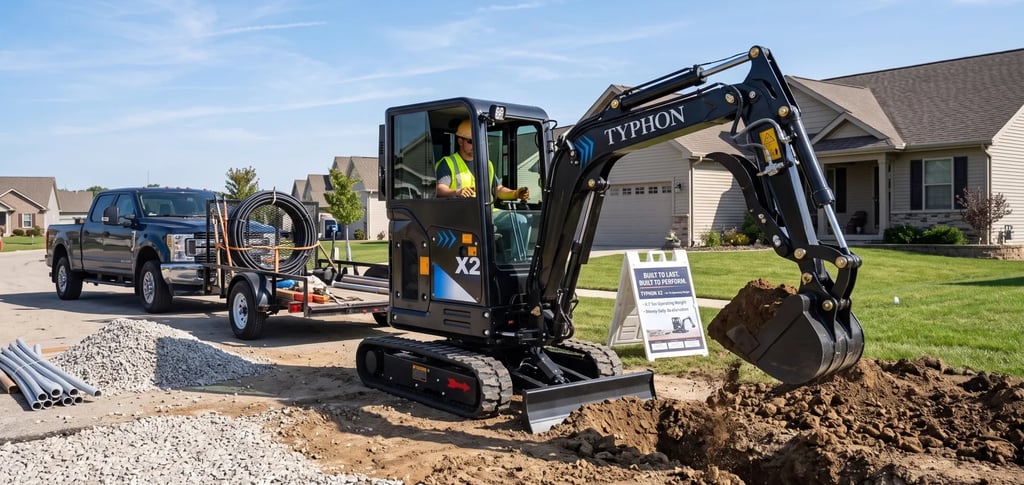
For a small contractor, every piece of equipment has to earn its place. Space is limited, budgets are tight, and machines that sit idle drain profit fast. That's exactly why a mini excavator makes so much sense. It's compact enough to work almost anywhere, powerful enough to replace hours of hand labor, and versatile enough to handle jobs across nearly every trade.
Whether you dig footings, install utilities, do site prep, or handle landscaping and hardscape work, a mini excavator turns tasks that once took a full crew into a job for one operator. And with used and new machines readily available at a wide range of price points, owning one has never been more within reach for a small business.
A mini excavator also helps small contractors take on a wider variety of projects without investing in multiple specialized machines. By using different attachments, the same machine can adapt to changing job requirements throughout the year, increasing equipment utilization and creating more opportunities to generate revenue. This flexibility allows contractors to stay competitive, maximize return on investment, and respond quickly to new customer demands.
It Handles More Jobs Than Almost Any Other Machine
A mini excavator's biggest selling point is range. One machine covers digging, lifting, grading, demolition, and material handling, which means fewer tools to buy, store, and maintain. For a small contractor juggling different jobs each week, that flexibility is worth its weight in billable hours.
Instead of transporting multiple machines from one project to another, contractors can complete a wide range of tasks with a single piece of equipment by changing attachments as needed. This reduces transportation costs, simplifies equipment management, and keeps crews productive throughout the workday. The ability to move seamlessly between different types of work also helps contractors accept more diverse projects without significantly increasing overhead.
One Machine Across Every Trade
A mini excavator doesn't lock you into one type of work. In the morning it can dig a footing for a foundation crew, then trench for plumbing, then backfill and grade before the day ends. The same machine that serves an excavation contractor serves a landscaper, a utility installer, and a general remodeler.
That crossover matters when your work varies season to season. Instead of turning down jobs outside your usual scope, you can take them on with equipment you already own. The machine adapts to your workload rather than the other way around.
Take On Work You'd Otherwise Subcontract
Without your own excavator, digging and grading jobs often get subcontracted out, and that margin goes to someone else. Owning the machine lets you keep that work in house, control the schedule, and pocket the profit yourself.
Over a year, the jobs you no longer hand off add up quickly. You bid more confidently, complete projects on your own timeline, and build a reputation for handling the full scope rather than passing pieces along.
The Math Favors Owning Over Renting
Renting makes sense for a one-off project, but for a working contractor the costs stack up fast. Daily and weekly rental fees, delivery charges, and fuel add up every time you need the machine. If you're renting several times a month, that money is far better spent building equity in a machine you keep.
Owning a mini excavator also gives you the freedom to schedule work without depending on rental availability or return deadlines. Jobs can start as soon as conditions are right, and unexpected opportunities can be accepted without waiting for equipment. Over time, this flexibility can improve project scheduling, reduce downtime between jobs, and help generate a stronger return on the investment.
Rental Costs Add Up Fast
A single rental might feel affordable, but frequent rentals tell a different story. Delivery and pickup fees, deposits, and the risk of the machine being unavailable when you need it all cut into your schedule and your margins.
Every rented day is money gone with nothing to show for it. Owning flips that equation. The machine becomes an asset on your books instead of a recurring line item on your expenses.
A Realistic Look at the Investment
Mini excavators come in a wide price range, from compact one-ton gas models in the four- to seven-thousand-dollar range up to larger three- to four-ton diesel machines with cabs and hydraulic thumbs running twenty thousand and above. That range means you can match the purchase to your budget and your typical job size.
Add in potential tax advantages for business equipment and the resale value these machines hold, and ownership often costs less than years of steady renting. When the machine is available the moment you need it, the return shows up in both saved fees and jobs you complete faster.
Compact Size Is a Serious Advantage
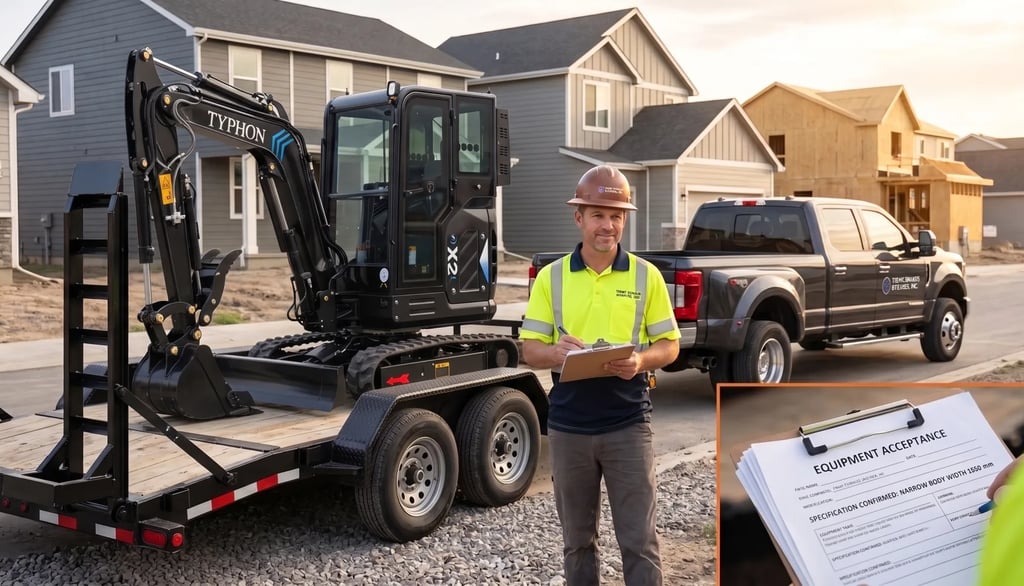
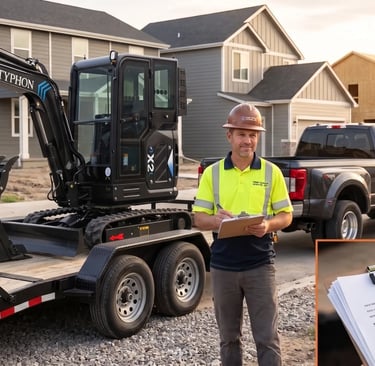
Full-size equipment can't reach the places a small contractor works most: backyards, tight lots, indoor demolition, and jobs bordered by fences, structures, and landscaping. A mini excavator fits where bigger machines can't, and that access opens up work you couldn't otherwise bid.
The smaller footprint also minimizes disruption to the jobsite. Narrow tracks, lower operating weight, and improved maneuverability help reduce ground damage and make it easier to work around existing features without extensive site restoration afterward. For contractors who regularly handle residential and urban projects, this combination of accessibility and precision can be a significant competitive advantage.
Get Into Spaces Big Machines Can't
A mini excavator fits through standard gates, works between existing buildings, and even operates indoors for demolition and interior digging. Its compact footprint lets you position the machine precisely where the work is, without tearing up everything around it.
For residential and urban jobs especially, that access is the whole game. You reach the work zone, get set up, and start digging in spots a full-size excavator would never fit.
Attachments Turn It Into a Full Tool Kit
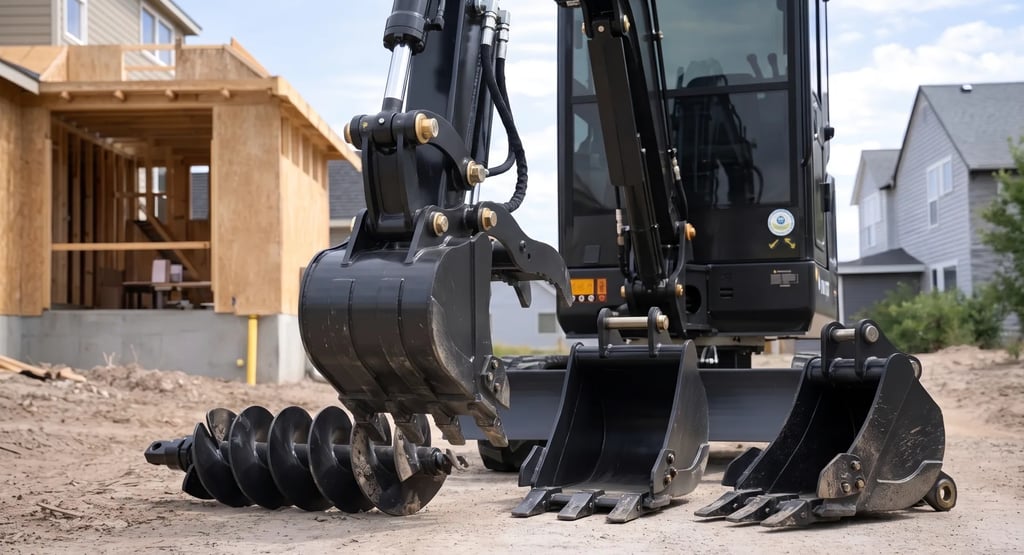
The excavator itself is only half the story. Swap the bucket for another attachment and the same machine becomes an auger, a breaker, a grapple, or a grading tool. That flexibility is what turns a single purchase into an entire equipment lineup.
Changing attachments allows contractors to adapt quickly to different phases of a project without bringing additional machines to the site. A single mini excavator can move from digging trenches to breaking concrete, handling debris, or finishing grades with minimal downtime. This versatility improves equipment utilization, reduces operating costs, and helps crews complete more work with fewer resources.
The Attachments That Earn Their Keep
A few key attachments can significantly expand what your machine is capable of on the jobsite. Augers make quick work of drilling clean post holes and footing foundations, hydraulic thumbs improve control when handling logs, rocks, brush, and mixed debris, and breakers provide the force needed for concrete demolition and other hard materials that would normally require specialized equipment.
Grading and tilt buckets allow for precise shaping, finishing, and slope control, while grapples make it easier to lift, sort, and load irregular or bulky materials. Together, these attachments reduce the need for multiple standalone tools or rented machines, allowing a single operator to manage a project from early demolition stages through final grading and cleanup.
Buy the Machine, Build the System
Many mini excavators sell bundled with multiple attachments, which stretches your investment further from day one. Quick-couplers let you switch tools in minutes, so you spend more time working and less time swapping equipment.
Start with the attachments your work demands most, then add to the set as your jobs grow. The machine becomes a system you build around your business, ready for whatever the next project requires.
TinyExcavator
Find mini excavator suppliers with reasonable prices and variety.
TYPHON Machinery Offices
2522 S Malt Ave. Commerce, CA 90040 United States
© 2025. All rights reserved.