10% Off Retail prices for our premium value mini excavators

Understanding Excavator Digging Depth
Learn how understanding excavator digging depth improves construction project efficiency and helps you in choosing the right excavator for your next job.
3/18/20265 min read
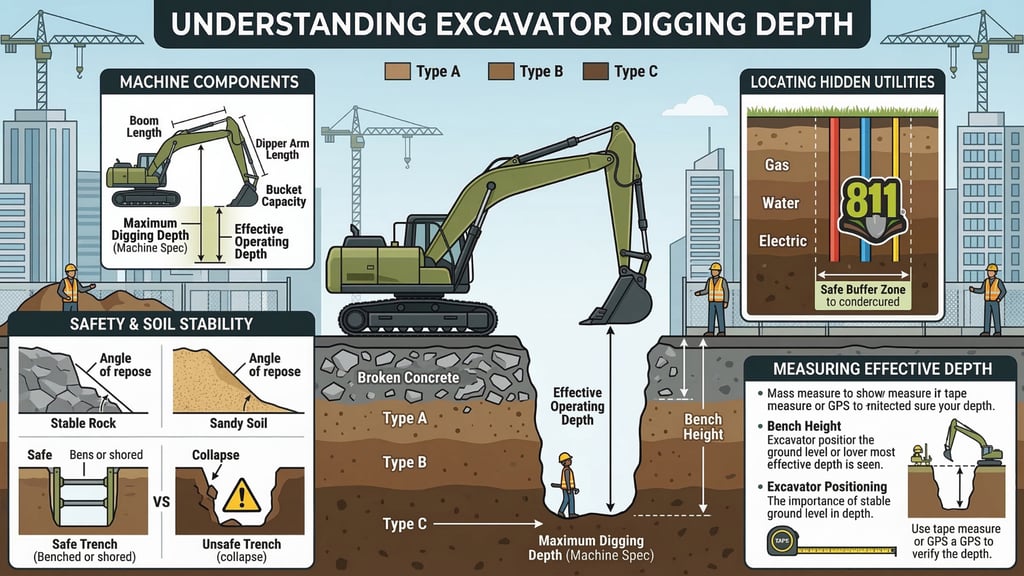
Every successful earthmoving operation begins with accurate planning and a deep understanding of your equipment's physical capabilities. When contractors prepare to break ground on a new site, they must evaluate precisely how far down they need to reach to lay utilities, pour foundations, or install drainage systems. Raw horsepower means very little if your machine simply cannot reach the required elevation. This is why mastering the concept of excavator digging depth remains absolutely critical for any construction professional.
Understanding excavator digging depth separates profitable, well-executed projects from those plagued by costly delays and dangerous workarounds. When you know the exact limits of your machinery, you eliminate the guesswork from your daily operations. You empower your crew to work confidently, knowing the equipment can handle the demands of the blueprint.
This comprehensive guide explores the mechanics and importance of digging depth in modern excavation equipment. We will examine how this vital specification directly influences construction project efficiency and overall site safety. By the end of this article, you will possess the knowledge required for choosing the right excavator, ensuring your next project stays on schedule and under budget.
What Exactly Is Excavator Digging Depth?
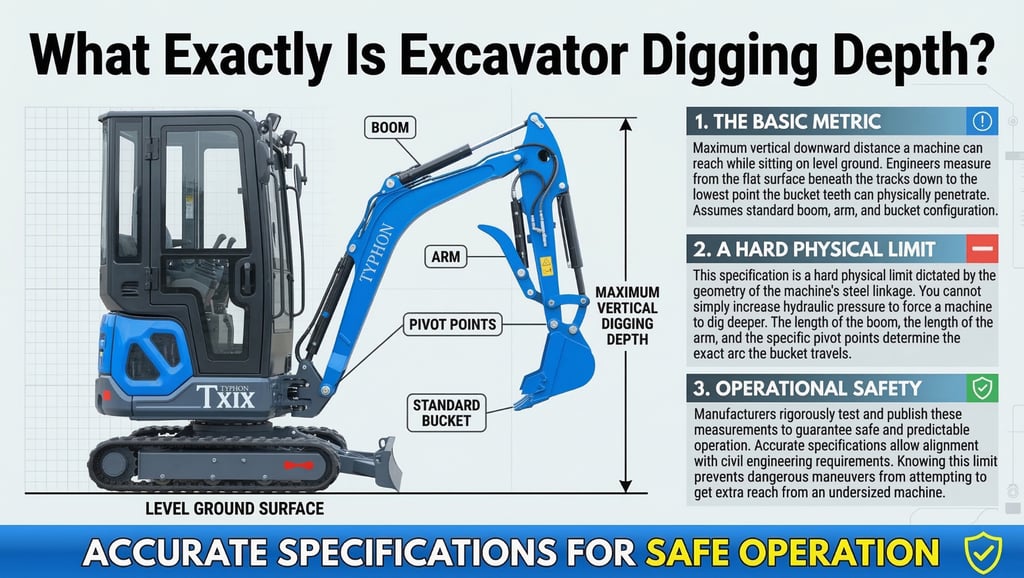
Excavator digging depth represents the maximum vertical downward distance a machine can reach while sitting on level ground. Engineers measure this specific metric from the flat surface beneath the tracks down to the lowest point the bucket teeth can physically penetrate. This measurement assumes the machine is operating a standard boom and arm configuration paired with a standard-sized bucket.
This specification is a hard physical limit dictated by the geometry of the machine's steel linkage. You cannot simply increase hydraulic pressure to force a machine to dig deeper than its structural design allows. The length of the boom, the length of the arm, and the specific pivot points determine the exact arc the bucket travels.
Equipment manufacturers rigorously test and publish these measurements to guarantee safe and predictable operation. Relying on accurate specifications allows project managers to align their heavy machinery fleet with the strict dimensional requirements of civil engineers and municipal building codes. Knowing this exact limit prevents operators from attempting dangerous maneuvers to squeeze an extra foot of reach out of an undersized machine.
The Direct Link to Construction Project Efficiency
Construction project efficiency relies entirely on completing tasks safely on the very first attempt. When you deploy an excavator with an adequate digging depth, the operator can excavate the entire trench profile without constantly repositioning the machine. This seamless workflow drastically reduces cycle times, saving countless hours of labor over the lifespan of a large commercial project.
Conversely, utilizing a machine that falls short of the required depth creates massive logistical bottlenecks. If the excavator cannot reach the bottom of the trench, the crew must excavate a lower bench for the machine to drive down into. This tedious process requires moving thousands of yards of unnecessary dirt, burning excess diesel fuel, and destroying your profit margins.
Furthermore, digging from a recessed bench compromises the operator's line of sight and limits their ability to cast excavated material safely away from the trench edge. By ensuring your machine possesses the proper reach from the original ground level, you maintain maximum visibility. This proactive approach keeps your operation moving swiftly and prevents expensive rework.
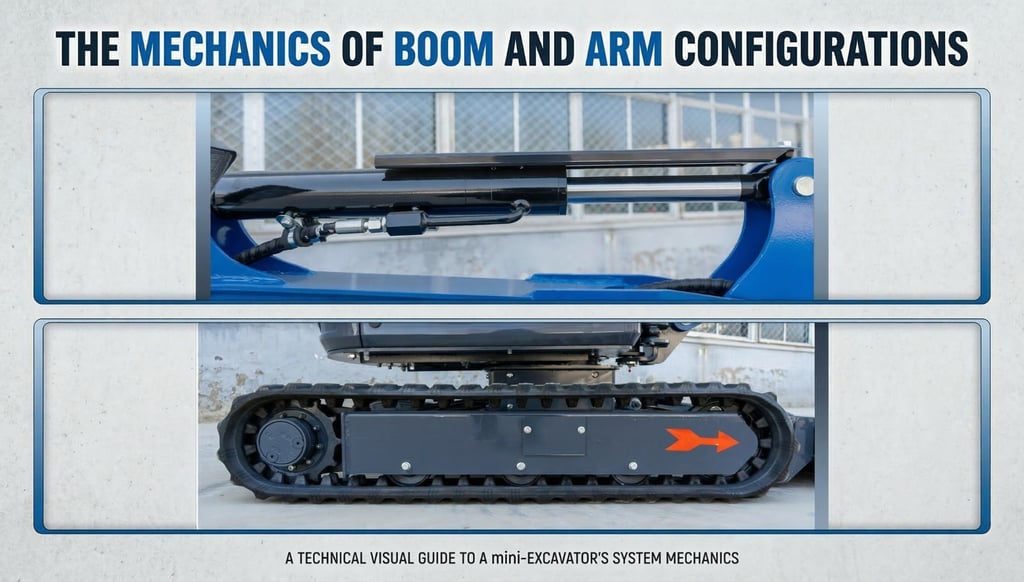
The Mechanics of Boom and Arm Configurations
The digging depth of an excavator is not a single, unchangeable number across an entire model lineup. Manufacturers offer various boom and arm configurations to tailor a single machine to specific industry applications. The standard boom and arm setup provides a balanced blend of digging depth, breakout force, and lifting capacity suitable for general construction.
For projects requiring extreme vertical reach, contractors utilize long-reach excavators. These specialized machines feature extended booms and arms designed specifically for deep trenching, dredging, and quarry operations. However, this extended reach comes with a necessary trade-off in heavy lifting capacity and bucket size.
When you extend the reach of the bucket further away from the machine's center of gravity, you decrease its mechanical leverage. Therefore, long-reach configurations must use smaller buckets to maintain stability and prevent tipping. Understanding this mechanical relationship helps you balance the need for extreme depth against the need for rapid material removal.
Choosing the Right Excavator for Your Needs
Selecting the perfect machine for your business requires a thorough analysis of your typical job site requirements. Choosing the right excavator means matching the machine's geometric capabilities to the specific depths dictated by your most frequent projects. You must never purchase a machine based solely on its operating weight or engine horsepower.
If your contracting business primarily installs shallow residential utility lines and small drainage culverts, a compact or mid-sized excavator offers plenty of reach. Purchasing a massive, deep-digging machine for these shallow applications wastes capital and limits your ability to maneuver in tight residential neighborhoods. A smaller machine provides the necessary depth while maintaining a highly efficient footprint.
However, if you specialize in deep sewer main installations or commercial foundation work, maximizing your digging depth becomes your top priority. You must invest in heavy-duty machinery engineered to plunge deep into the earth while remaining firmly anchored on the surface. Consulting closely with a reliable equipment provider ensures you match your exact project parameters with the optimal machine configuration.
Overcoming Deep Excavation Challenges
Trenching deep into the earth introduces a complex set of physical challenges that test both the machine and the operator. As the bucket digs deeper, the density and composition of the soil often change dramatically. Operators frequently encounter dense clay, massive boulders, or bedrock that require immense hydraulic power to break apart.
An excavator engineered for deep digging must possess a robust hydraulic system capable of delivering consistent power at the extreme end of its reach. If the hydraulic flow weakens at maximum extension, the bucket will stall against stubborn materials. High-quality machinery maintains a steady breakout force throughout the entire digging arc, ensuring consistent productivity at the bottom of the trench.
Safety also becomes paramount as the digging depth increases. Deep trenches pose severe collapse risks, requiring the installation of heavy steel trench boxes or shoring systems. Your excavator must not only dig a deep trench but also possess the lifting capacity to safely lower and position these massive safety structures into the excavation.
The Advantage
Well-designed excavators are engineered to meet the challenges of demanding earthmoving projects with a focus on performance, reliability, and precision. These machines are meticulously crafted to provide exceptional digging depth without sacrificing breakout force or structural stability.
Our engineers construct our excavator booms and arms using high-tensile steel, ensuring they withstand the immense torsional stress of deep trenching operations. We optimize the geometry of our linkages to provide an expansive working envelope. This intelligent design allows the operators to dig deeper and cast material further, minimizing the need for constant machine repositioning.
When you invest in buying a Mini Excavator, you receive heavy equipment backed by a steadfast commitment to your operational success. Our advanced hydraulic systems deliver smooth, predictable power directly to the cutting edge, regardless of the depth or soil conditions. We provide the heavy-duty solutions you need to tackle deep excavations with absolute confidence and superior efficiency.
Conclusion
Excavator digging depth is a foundational specification that directly dictates the success and profitability of your earthmoving projects. By understanding how this physical measurement impacts site logistics, cycle times, and operational safety, you can make highly informed decisions regarding your equipment fleet. Prioritizing the correct reach ensures your crew can execute complex blueprints accurately and efficiently.
Evaluate your current machinery and assess whether your fleet aligns with the depth requirements of your upcoming contracts. If your operators are constantly struggling to reach the bottom of the trench or wasting time building dirt benches, it is time to upgrade your equipment. Choosing the right excavator requires matching your specific job site realities with a machine built to handle those precise demands.
Selecting an excavator that meets the specific needs of your projects can have a significant impact on efficiency and long-term success. Consider the demands of your trenching and foundation requirements, and consult with industry experts if needed to ensure you choose equipment that aligns with your operational goals. The right excavator is a key asset in elevating construction project outcomes and supporting your business's ongoing growth.
TinyExcavator
Find mini excavator suppliers with reasonable prices and variety.
TYPHON Machinery Offices
2522 S Malt Ave. Commerce, CA 90040 United States
© 2025. All rights reserved.