10% Off Retail prices for our premium value mini excavators

Skid Steer Overheating? Common Causes and Fixes
An operator is halfway through grading a hot summer lot when the temperature gauge climbs into the red.
SKID STEER
7/27/202610 min read
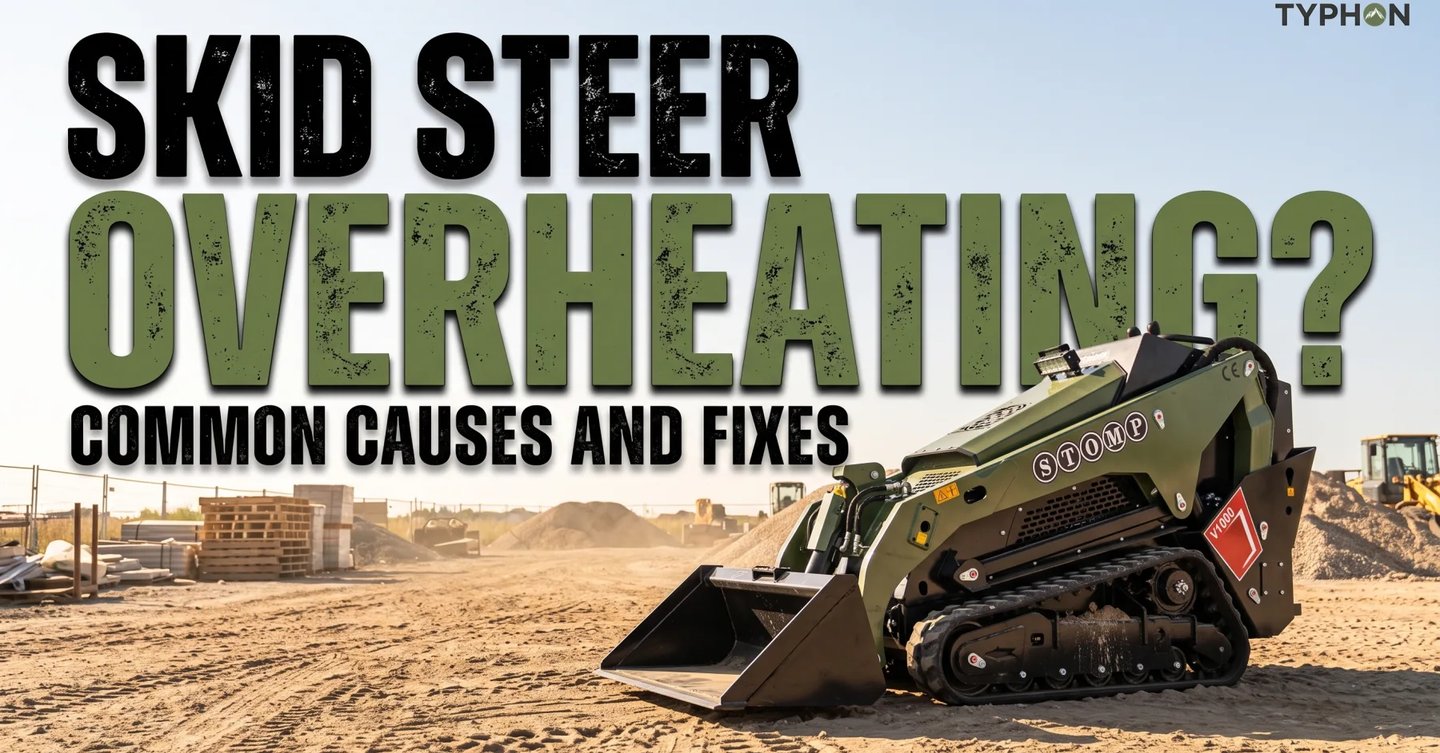
An operator is halfway through grading a hot summer lot when the temperature gauge climbs into the red. He's on a deadline, so he keeps pushing, figuring the machine will settle down on its own. Ten minutes later steam rolls out from under the rear panel, the engine loses power, and a warning light he'd been ignoring finally forces him to shut down. When the machine cools, he finds a radiator packed solid with dust and grass, a coolant reservoir sitting nearly empty, and a cracked hose that let it drain unnoticed. A half-day of work vanishes, and a repair that a five-minute cleaning would have prevented turns into a tow and a shop bill. The skid steer wasn't failing. The warning signs just went unread.
A skid steer that overheats rarely does so without cause, and it almost never does so without warning. Heat builds when something blocks the cooling system, drains the fluids, chokes the airflow, or pushes the machine past what it can handle. The good news is that nearly every cause is easy to spot and fix once you know where to look. This post walks you through why a skid steer overheats and what to do about it: the common causes behind rising temperatures, how to diagnose the real culprit on site, the fixes and maintenance that bring temperatures back down, and how to judge when to stop the machine versus keep working. Sort these out, and your skid steer runs cool through the hardest shift.
The Common Causes Behind a Rising Temperature
Most overheating traces back to a short list of usual suspects, and recognizing them is the first step to a fast fix. A skid steer sheds heat through its cooling system and steady airflow, so anything that disrupts either one sends temperatures climbing. Knowing these causes turns a stressful warning light into a quick diagnosis.
Clogged Radiators and Coolers
The single most common cause of overheating is a cooling package choked with debris. A skid steer works in dust, dirt, grass, and chaff, and that material packs into the radiator and oil cooler fins until air can't pass through. Blocked fins can't shed heat, so temperatures rise fast even when everything else is fine.
Cleaning is the cheapest fix on the list. Blowing the cooling package clear with compressed air, working from the fan side out, restores airflow in minutes. Building skid steer cooling system maintenance into your daily routine keeps the fins open, since a package cleaned every shift never gets the chance to pack solid and cook the engine.
Low or Degraded Fluids
Coolant and hydraulic fluid both carry heat away, so when either runs low, temperatures climb. A leaking hose, a bad seal, or simple neglect can drop the coolant level until the system can't do its job, and old, broken-down fluid loses its ability to shed heat even at a full level.
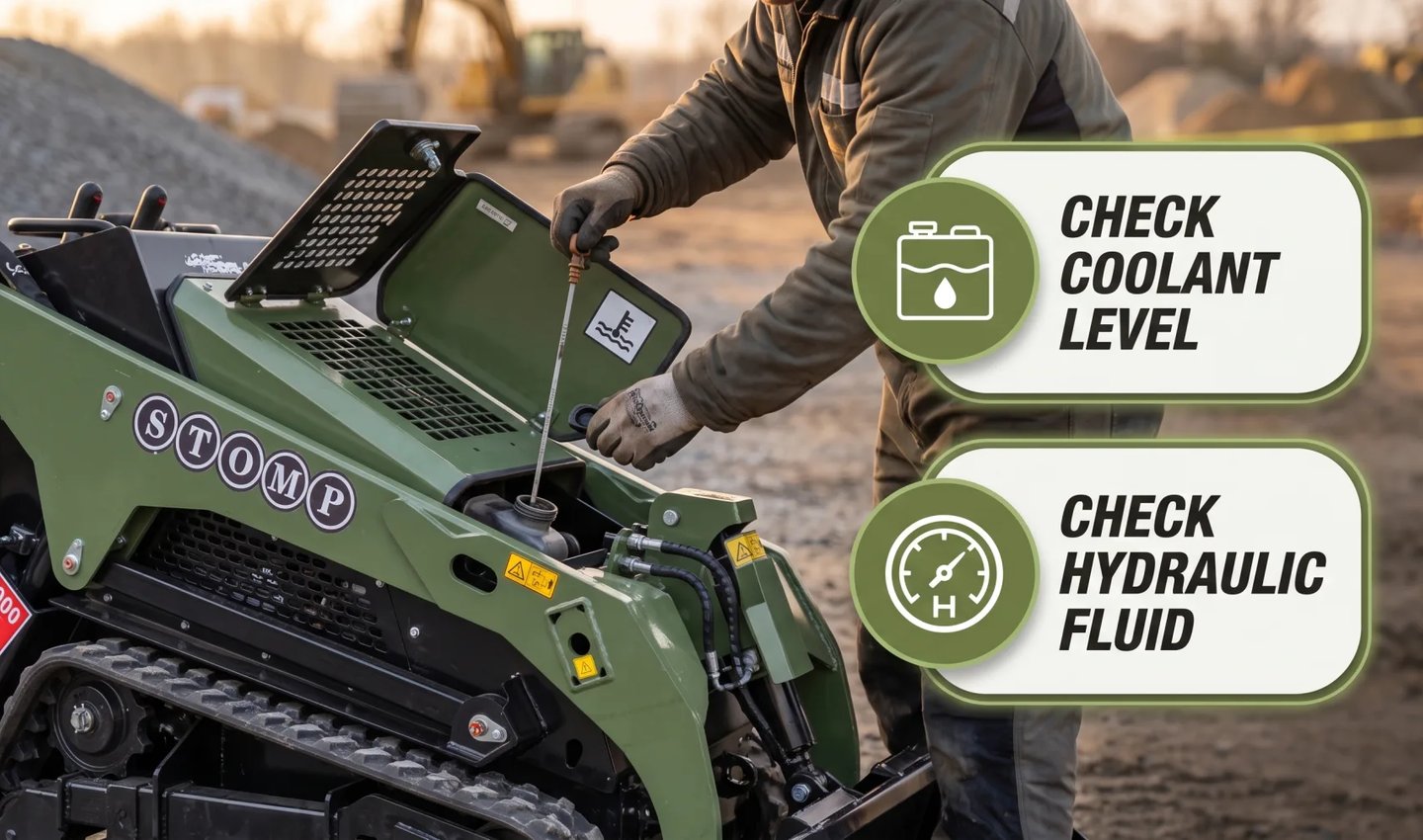
Check the levels before every shift and watch for leaks underneath. Learning the hydraulic fluid overheating signs, like sluggish response and a hot reservoir, helps you catch a low or degraded system early. Topping off with the correct coolant and fluid, and replacing them on schedule, keeps the machine carrying heat away the way it should.
Restricted Airflow and Overloading
Airflow and workload round out the common causes. A clogged air filter, a slipping or broken fan belt, or debris packed around the engine bay all starve the machine of the airflow it needs to stay cool. Each one quietly raises operating temperature until a hot day tips it over the edge.
Overworking the machine does the same from the other direction. Pushing heavy loads, running hard in high heat, or lugging the engine generates more heat than the system can shed. Matching your workload to the machine's capacity, and easing off in extreme heat, keeps the cooling system ahead of the demand.
Takeaway:: clogged coolers, low or degraded fluids, and restricted airflow or overloading account for nearly every overheating case, so start your diagnosis with these four before looking anywhere else.
Diagnosing the Real Cause on Site
When the temperature climbs, a calm, ordered check finds the culprit fast and keeps you from replacing parts you don't need. Overheating has clear symptoms if you know how to read them, and most causes reveal themselves in a few minutes of looking. Working through the checks in order saves both time and money.
Read the Warning Signs Early
The machine tells you it's overheating before it fails, so learn its signals. A climbing temperature gauge, a warning light, reduced power, or the smell of hot coolant all point to rising heat. Steam or an audible boil means the problem has already gone too far, so act on the earlier signs instead.
Catch it while it's still small. Glancing at the gauge regularly during a hard shift lets you respond to a slow climb before it becomes a shutdown. An operator who reads these early warnings solves a five-minute problem, while one who ignores them faces a tow and a repair bill.
Work Through the Checks in Order
Diagnose from the simplest cause to the most complex, since the common culprits are also the easiest to check. Follow this order once the machine has cooled safely:
Inspect the cooling package. Look for a radiator or oil cooler packed with dust, grass, or debris blocking airflow.
Check the fluid levels. Confirm coolant and hydraulic fluid sit at their proper marks and look for leaks underneath.
Examine airflow parts. Check the air filter for clogging and the fan belt for wear, tension, or breakage.
Review the workload. Consider whether heavy use, high heat, or lugging the engine pushed the machine past its limit.
Most overheating traces back to one of these, so this simple sequence usually finds the cause without special tools.
Confirm Before You Fix
Once a check points to a likely cause, confirm it before spending time or parts. A packed radiator explains the heat on its own, a visibly low reservoir points straight to fluid, and a loose or glazed belt confirms an airflow fault. Matching the symptom to what you find prevents chasing the wrong repair.
If the easy checks all pass and the machine still overheats, the cause may run deeper, like a failing water pump, a stuck thermostat, or a clogged internal passage. Knowing when a skid steer engine cooling problem has moved beyond a simple fix tells you it's time for a qualified diagnosis rather than more guessing.
Takeaway:: read the warning signs early, work the checks from simplest to most complex, and confirm the cause before you fix it, so you solve the real problem the first time instead of replacing parts at random.
Fixes and Maintenance That Bring Temperatures Down
Once you know the cause, the fix is usually straightforward, and steady maintenance stops most overheating before it ever starts. Good upkeep costs a fraction of a repair and keeps the machine working through the hottest, hardest conditions. These are the habits that keep a skid steer running cool.
Clean, Top Off, and Restore Airflow
Start with the fixes that match the common causes. Clear the cooling package with compressed air until the fins pass air freely, top off or replace low and degraded coolant and hydraulic fluid, and clean or swap a clogged air filter. Each of these takes minutes and resolves the majority of overheating on the spot.
Restore the airflow parts too. Adjust or replace a loose, worn, or broken fan belt so the fan pulls full air through the cooling package, and clear any debris packed around the engine bay. With the cooler clean, the fluids full, and the airflow restored, most machines drop straight back to a normal operating temperature.
Build a Preventive Maintenance Routine
The cheapest overheating fix is the one you never need because prevention handled it. Set a simple daily and periodic routine and stick to it:
Every shift: blow out the cooling package, check coolant and hydraulic levels, and glance over the belt and air filter.
Weekly: clean the air filter or replace it as needed, and inspect hoses for leaks, cracks, or soft spots.
On schedule: replace coolant and hydraulic fluid at the recommended intervals, and service the belt and thermostat before they fail.
A machine maintained on this rhythm rarely overheats, because the causes never get the chance to build. Consistent care turns overheating from a recurring headache into a rare event.
Address the Deeper Repairs
Some causes sit beyond a quick clean or top-off, and forcing the machine past them only makes the damage worse. A failing water pump, a stuck thermostat, a leaking hose or radiator, or a clogged internal coolant passage all need proper repair rather than a field fix. Ignoring them risks a cracked head or a seized engine.
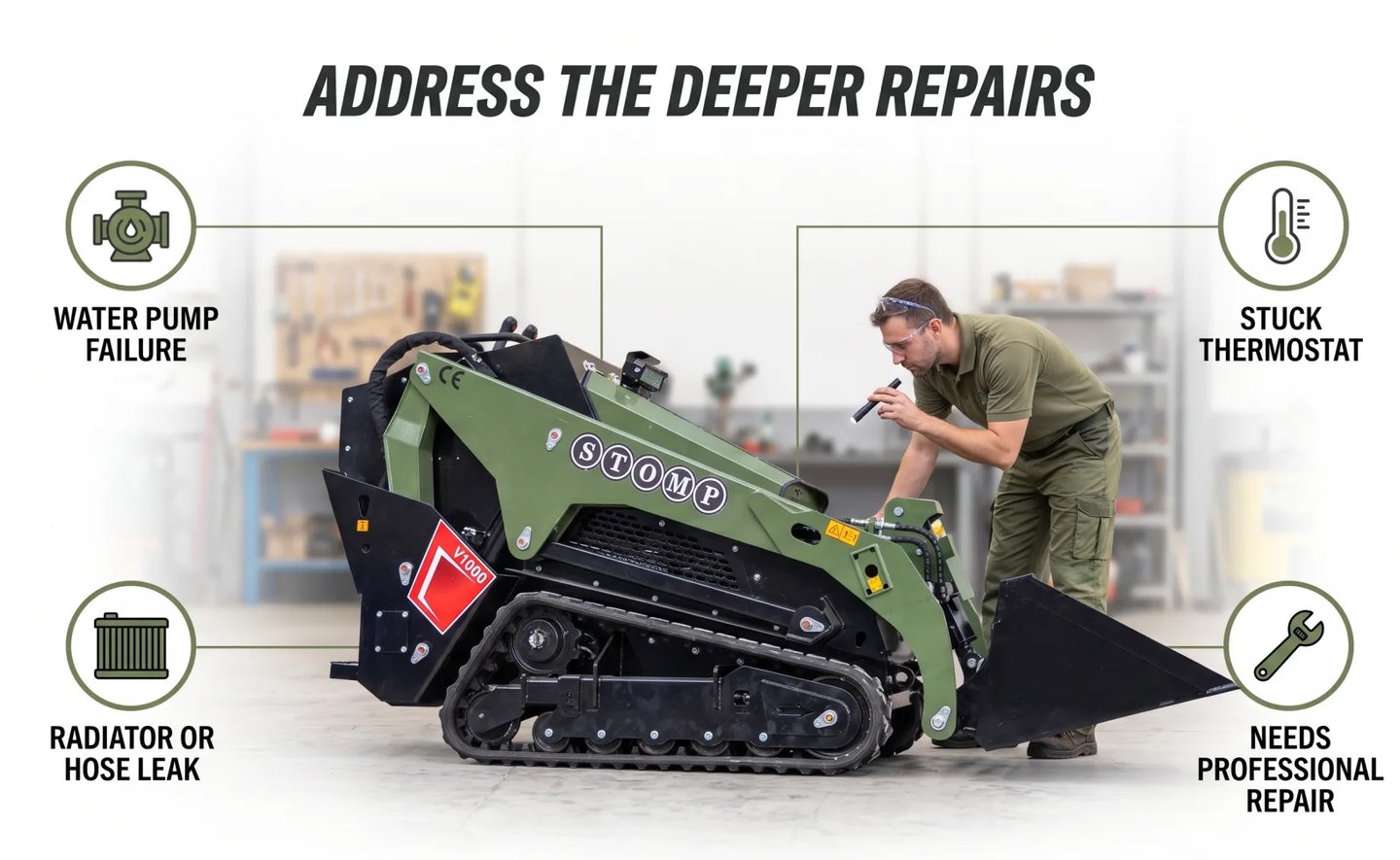
Know the line between routine care and a shop job. Cleaning, topping off, and swapping a filter or belt are well within an operator's reach, but internal cooling faults call for a qualified technician. Leaning on dependable service for those deeper repairs keeps a small cooling problem from becoming a machine-ending one.
Takeaway:: clean the cooler, top off the fluids, and restore airflow to fix most overheating fast, back it with a steady maintenance routine, and turn to proper repair for the deeper faults, so the machine stays cool and protected shift after shift.
Knowing When to Stop and When to Keep Working
The most important decision an operator makes when a skid steer overheats is whether to keep going or shut down, because that call can save or destroy an engine. Pushing a hot machine to finish a task risks catastrophic damage, while a quick, smart stop often costs only minutes. Getting this judgment right protects both the job and the machine.
Stop Immediately for These Warning Signs
Certain signals mean stop now, not at the end of the pass. Shut the machine down promptly if you see steam, hear coolant boiling, watch the temperature gauge peg into the red, or notice a sudden loss of power alongside the heat. These signs mean the cooling system has already lost the battle.
Running past this point is where engines crack and seize. A few more minutes of work is never worth a blown head gasket or a warped block, so treat these signals as a hard stop. Shutting down early and letting the machine cool safely almost always turns a disaster into a delay.
Cool Down Safely, Not Suddenly
How you cool a hot machine matters as much as stopping it. Move the skid steer to a safe spot, then let the engine idle briefly before shutting off so coolant keeps circulating and heat sheds evenly. Killing a very hot engine instantly can shock components and worsen the damage.
Never open a hot cooling system. Wait for the engine to cool before checking the coolant, since a pressurized hot system can spray scalding fluid and cause serious burns. Patience during cool-down protects both you and the machine, so give it the time it needs before you inspect or top off anything.
When It's Safe to Keep Working
Not every temperature rise means a shutdown, so know when a quick fix lets you carry on. If you catch a slow climb early and find a simple cause, like a packed cooler or a load that's too heavy, you can often solve it and keep working. Clean the fins, ease the workload, or let the machine idle to cool, then resume.
The key is acting on the early warning rather than the late one. A minor rise addressed promptly rarely stops the day, while an ignored one ends it. When in doubt, err toward stopping, because the cost of a short pause is nothing next to the cost of a ruined engine.
Takeaway:: stop immediately for steam, boiling, a redlined gauge, or lost power, cool the machine down safely rather than suddenly, and keep working only when you've caught a rise early and fixed a simple cause, so your judgment protects the engine every time.
Frequently Asked Questions
Why does my skid steer keep overheating?
The most common reasons are a cooling package clogged with dust or debris, low or degraded coolant and hydraulic fluid, and restricted airflow from a dirty filter or worn fan belt. Start by cleaning the radiator and oil cooler, checking fluid levels, and inspecting the filter and belt. If those all check out, a deeper fault like a failing water pump or stuck thermostat may be the cause.
Can I keep working if my skid steer is running a little hot?
Sometimes, if you catch it early and find a simple cause. A slow temperature rise from a packed cooler or a heavy load can often be fixed by cleaning the fins, easing the workload, or letting the machine idle to cool, after which you can carry on. But steam, boiling coolant, a redlined gauge, or a sudden loss of power all mean stop immediately. When in doubt, shut down, because a short pause costs far less than a cracked or seized engine.
How do I stop my skid steer from overheating in the first place?
Prevention comes down to a steady routine. Blow out the cooling package every shift, check coolant and hydraulic levels daily, and glance over the air filter and fan belt. Clean or replace the filter weekly, inspect hoses for leaks and cracks, and replace fluids and service the belt and thermostat on schedule. Match your workload to the machine's capacity and ease off in extreme heat. A skid steer maintained this way rarely overheats, since the common causes never get the chance to build.
Conclusion
A skid steer that overheats is almost always pointing to a cause you can find and fix, since the trouble nearly always traces back to a cooling package clogged with debris, low or degraded coolant and hydraulic fluid, restricted airflow from a dirty filter or worn belt, or a machine pushed harder than its cooling system can handle. The reliable way to stay ahead of it is to read the warning signs early, work your checks from the simplest cause to the most complex, and confirm the real culprit before spending time or parts, then back every fix with a steady routine of cleaning the cooler, checking the fluids, and servicing the airflow parts so the causes never get the chance to build. Just as important is knowing when to stop, because shutting down promptly for steam, boiling, a redlined gauge, or lost power, and cooling the machine safely rather than suddenly, protects an engine that a few more minutes of work would ruin. Get that judgment and that maintenance right, and your skid steer runs cool and dependable through the hardest shift. When you're ready to source dependable parts, cooling components, or the service support to keep your machine running cool, reach out to a trusted equipment specialist who can pair reliable equipment with the results your projects depend on.
TinyExcavator
Find mini excavator suppliers with reasonable prices and variety.
TYPHON Machinery Offices
2522 S Malt Ave. Commerce, CA 90040 United States
© 2025. All rights reserved.