10% Off Retail prices for our premium value mini excavators

Mini Excavator Trenching Bucket Size Guide: 200mm vs 300mm vs 400mm and Wider
A visual size guide for mini excavator trenching buckets. Shows the difference between narrow 200mm trenching buckets for irrigation and standard 300mm/400mm buckets for utility lines.
2/18/20267 min read
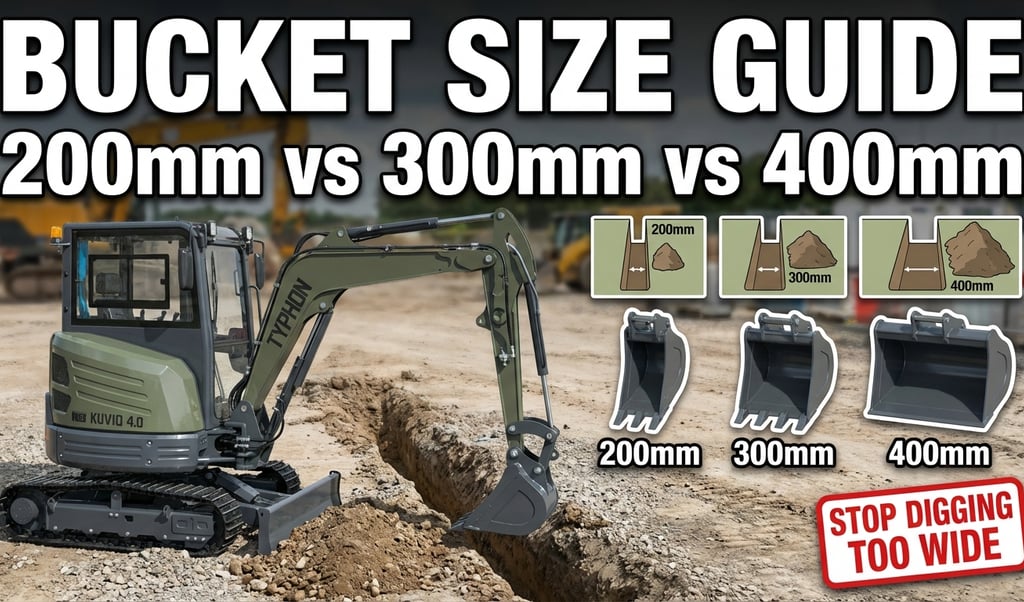
Picking a mini excavator trenching bucket sounds simple until you are halfway through a job and realize you dug a trench wider than your backfill pile. Now you are moving extra spoil, importing extra material, and compacting forever.
Bucket width affects everything:
Speed of excavation
Clean trench walls and consistent depth
Backfill volume and backfill time
Compaction effort and settlement risk
Material costs for bedding and backfill
Finish quality on lawns, driveways, and paved areas
The goal is not to dig the biggest trench your machine can handle. The goal is to dig the trench your install actually needs, cleanly, consistently, and with the least rework.
The rule that keeps you from wasting time
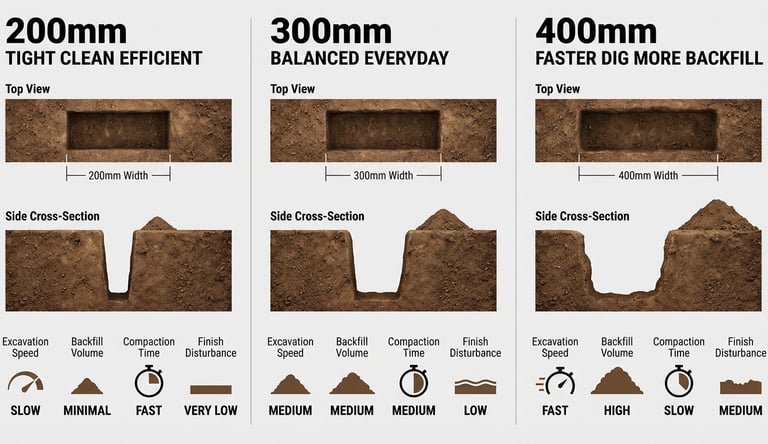
A wider trench creates a bigger spoil pile. A bigger spoil pile means more backfill. More backfill means more compaction. More compaction means more hours. And if compaction is rushed or skipped, you pay later with sinking, soft spots, and callbacks.
A mini excavator trenching bucket is a productivity tool only when its width matches the job. Too wide is not safer. It is usually just slower when you count the full job from first cut to final finish.
What trench width really needs to cover
Before you pick 200mm, 300mm, or 400mm, think about what the trench must physically accommodate:
The outside width of the pipe, conduit, or service you are placing
The side clearance you need to adjust the alignment
The bedding or base material you need under the line
The space required for proper backfill placement and compaction method
Most jobs need enough room to place and align the line without fighting the trench walls. That does not mean wide. It means appropriate.
A trench that is only slightly wider than the install is usually faster overall because you move less dirt and you restore the surface quicker.
200mm trenching bucket: tight, clean, efficient
A 200mm mini excavator trenching bucket is a specialist tool, and when it is the right tool, it feels like cheating.
Choose 200mm when:
You want minimal disturbance in lawns and finished landscapes
You are laying smaller lines like irrigation, conduit, small drainage, and low-voltage runs
You care about clean trench walls and neat restoration
You want to reduce backfill volume and reduce compaction time
You are working near existing structures and need precision
-Why 200mm works so well
A narrow bucket cuts a clean path. The spoil pile stays smaller. The trench edges stay tighter. That means less mess, less cleanup, and less surface repair. When the client cares about the finish, a 200mm trench often looks like a professional job from the start.
Where 200mm can slow you down
Narrow buckets can take more passes if you are chasing depth in hard ground. They can also struggle when you need more side room for larger pipe fittings or when you need extra bedding thickness in soft soils. If the trench becomes too tight to place and align the line, you will lose time fighting the install.
Pro tip for 200mm trenching
If the ground is hard, rip first, then trench. A ripper pass can turn a frustrating trench into a smooth production trench.
300mm trenching bucket: the balanced everyday choice
A 300mm mini excavator trenching bucket is often the most versatile option for real jobs. It is wide enough to work comfortably and narrow enough to avoid unnecessary excavation.
Choose 300mm when:
You do property drainage and general utility trenching
You want a clean trench, but also want decent speed
You need a little more room for bedding and alignment
You are doing small foundation prep and service trenches
You want one trenching bucket that covers most weekly work
Why 300mm is the sweet spot
It balances control and productivity. You are not micro-trenching, but you are also not digging a canal. For many operators, 300mm becomes the default because it keeps the job moving without creating a huge backfill burden.
Where 300mm shines
Drainage runs where you want room for bedding, but still want minimal disturbance
Utility trenches where consistent width anda clean bottom matter
Jobs where the trench must look professional and be restored cleanly
If you are buying a mini excavator trenching bucket to do most trench work, 300mm is the size
many people settle on for a reason.
400mm trenching bucket: general-purpose trenching with faster volume
A 400mm mini excavator trenching bucket is a volume and comfort choice. It can speed
up excavation in easy ground, and it gives you more room for placement and adjustments
inside the trench.
Choose 400mm when:
You need more room to work in the trench during placement
You are laying larger pipe or multiple services in one run
You want faster digging in softer material
You are trenching where the finished restoration is not delicate
You are okay trading more digging now for more backfill later
The honest tradeoff
A 400mm trench digs faster per pass, but you pay for the width later. More spoil means more backfill. More backfill means more compaction. More compaction means more time. If the ground is rocky or the route crosses finished areas, the extra width can become expensive.
When 400mm makes sense
Rural runs where surface restoration is simple
Softer soils where the bucket cuts easily
Installs that benefit from extra side room for alignment and bedding
When 400mm becomes a mistake
Lawns, landscaped property, and tight urban spaces
Jobs where compaction quality matters for long-term settlement
Sites where you must minimize disturbance and restore cleanly
A 400mm mini excavator trenching bucket can be the right tool, but it should be chosen intentionally, not by habit.
Plain buckets 500mm and 1000mm: not trenching tools, still important
Wider plain buckets are excellent attachments, but they are not trenching tools. They are movers and shapers.
Use wider plain buckets for:
Cleanup after trenching
Moving loose soil and spreading backfill
Shaping and smoothing surfaces
Loading spoil into a trailer or stockpile
Final grading passes where you want a broader finish
A wider bucket is not a better trencher. It is a faster mover. Many pros trench with a dedicated mini excavator trenching bucket and then switch to a wider bucket for cleanup and restoration. That workflow often beats trying to trench and finish with one bucket.
A fast professional method to choose the bucket width
Use this decision method on every trenching job. It takes a minute and prevents hours of rework.
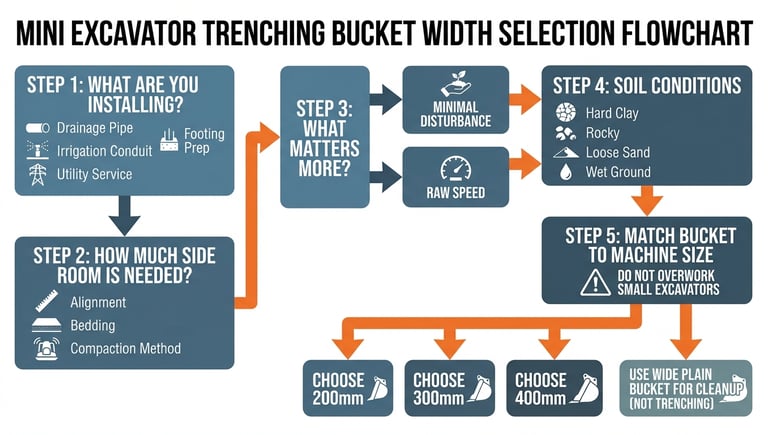
Step one: Identify what you are laying
Ask what is going into the trench:
Drainage pipe
Irrigation line
Electrical conduit
Utility service line
Footing prep or edge trench
Your install sets the minimum width. Do not start with the bucket and force the plan to match it.
Step two: Decide how much side room you actually need
The side room should be enough to:
Place the line without forcing it
Adjust alignment without scraping trench walls
Add bedding and cover material properly
If you need precise alignment and clean walls, narrower often performs better. If you need room for bedding and adjustments, go wider, but only as much as needed.
Step three: Decide what matters more: minimal disturbance or raw speed
If the job is on a finished property, minimal disturbance usually wins. That pushes you toward 200mm or 300mm.
If the job is open ground and you are chasing production, a 400mm bucket may make sense, as long as you accept the backfill and compaction cost.
Step four: Consider soil and ground conditions
Soil can change what bucket width feels best.
Hard clay and compacted ground may favor ripping first, then trenching
Rocky soil can slow you down and make narrow buckets feel harder to control
Loose sand can collapse and make wider trenches messier than expected
Wet ground increases sloughing and can punish wide trenches with messy edges
A bucket sizing guidance principle most operators learn quickly is that width changes stress, control, and performance. Your mini excavator trenching bucket is part of your machine system, not just a scoop.
Step five: Match the bucket to your machine size
A smaller mini excavator can be overworked by an overly wide bucket in tough ground. That leads to slow cycling, more wear, and a rougher trench.
If your machine struggles, the trench quality drops, and the job slows down. A narrower bucket can sometimes be faster overall because the machine stays in control and cycles smoothly.
Trench quality: why the right bucket size looks better
A well-sized mini excavator trenching bucket creates a trench that is easier to install into and easier to restore.
Good trenching looks like:
Consistent width from start to finish
Clean walls with minimal collapse
Consistent depth with a clean trench bottom
Smooth grade transitions, not bumps and potholes
A manageable spoil pile, not a mountain
Bucket size helps you hit that standard without constant correction passes.
Common trenching mistakes and how to avoid them
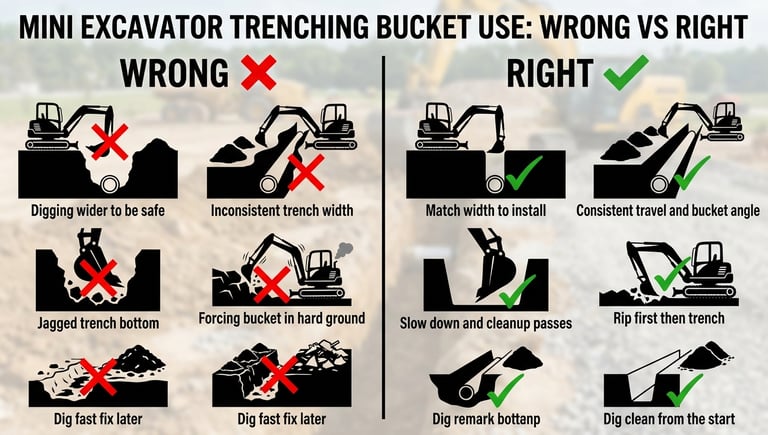
Mistake: trenching wide just to be safe
Why it hurts
You increase spoil, increase backfill, increase compaction, and increase restoration time.
Fix
Choose the correct mini excavator trenching bucket width for the install and keep it consistent.
Mistake: inconsistent trench width
Why it hurts
Backfill and compaction become inconsistent, and the finish settles unevenly.
Fix
Maintain straight travel and consistent bucket angle. Do not wander. Do not widen corners without a reason.
Mistake: jagged trench bottoms
Why it hurts
Install becomes harder, the bedding becomes uneven, and the drainage can suffer.
Fix
Slow down, control curl, and do cleanup passes. A clean bottom is faster to work with than a rough bottom.
Mistake: forcing the bucket through hard ground
Why it hurts
You waste time, stress the machine, and end up with a messy trench.
Fix
Rip first, then dig. A ripper pass often makes trenching smoother and cleaner.
Mistake: digging fast and fixing later
Why it hurts
Later is always slower. Cleanup and restoration time eats into the benefit.
Fix
Dig clean from the start. A consistent trench saves time across the entire job.
Bottom line
The right mini excavator trenching bucket size is the one that meets the installation needs without creating unnecessary excavation.
200mm is tight, clean, and great for minimal disturbance
300mm is the balanced everyday choice for many weekly jobs
400mm is a faster volume when you accept the backfill and compaction cost
Wide plain buckets are for cleanup and shaping, not trenching
TinyExcavator
Find mini excavator suppliers with reasonable prices and variety.
TYPHON Machinery Offices
2522 S Malt Ave. Commerce, CA 90040 United States
© 2025. All rights reserved.