10% Off Retail prices for our premium value mini excavators

How to Transport Compact Equipment Safely and Efficientl
Master how to transport compact equipment safely. Discover weight limits, trailer selection, and loading and unloading construction equipment tips.
4/1/20266 min read
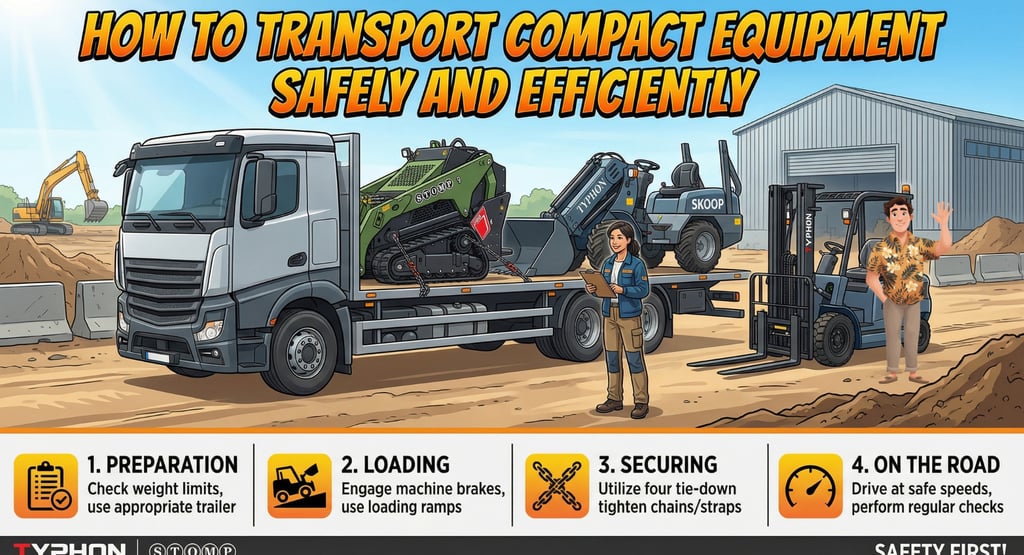
Moving heavy machinery between job sites presents a massive logistical challenge. A simple mistake during transit can cause catastrophic damage to your machinery, transport vehicles, and the surrounding public. Therefore, establishing a strict, standardized hauling protocol is not just an operational preference; it is a fundamental safety requirement.
Your contracting business relies heavily on the mobility of your fleet. When you transport compact equipment properly, you protect your capital investment and ensure your crew arrives ready to work. Understanding the exact mechanical limits of your hauling setup keeps you compliant with strict transportation regulations and shields your company from severe liability.
This comprehensive guide delivers essential safe equipment transport tips to streamline your logistics. We will explore how to calculate accurate weight loads and select the precise trailer for your fleet. You will also learn proven, professional techniques for loading and unloading construction equipment to maximize job site safety and operational efficiency.
The Financial and Safety Risks of Improper Hauling
Contractors frequently underestimate the extreme physical forces involved in moving heavy iron. Even a small mini excavator or compact track loader weighs thousands of pounds. When that mass shifts suddenly at highway speeds, it easily overwhelms the towing vehicle.
An unsecured load can break through standard tie-downs, violently launching the machinery off the trailer. This scenario routinely causes fatal highway accidents and results in massive corporate lawsuits. Even minor shifting can severely bend your trailer axles or destroy the heavy-duty suspension of your towing truck.
By implementing rigid transportation protocols, you eliminate these dangerous variables. Proper logistics protect the structural integrity of your trucks and trailers, saving you thousands of dollars in premature repair costs. More importantly, professional hauling practices guarantee the safety of your operators and the general public.
Understanding Weight Considerations and Capacities
Before you attempt to move any machine, you must know exactly how much weight your setup can legally and mechanically handle. Guessing the weight of your equipment frequently leads to disastrous mechanical failures. You must calculate your numbers with absolute precision.
Know Your Tow Vehicle's Limits
Every heavy-duty truck possesses a Gross Combined Weight Rating (GCWR). This number represents the absolute maximum allowable weight of the fully loaded truck, the trailer, the machinery, and all passengers. Exceeding this manufacturer-specified rating severely compromises the truck's braking system and transmission.
You must also verify the truck's specific towing capacity and hitch rating. A heavy-duty truck might possess a massive towing capacity, but if the installed hitch is only rated for light-duty work, the entire system fails. Always inspect the stamped weight ratings on your hitch receiver, drawbar, and trailer ball before hooking up.
Factoring in Attachments and Gear
A common mistake contractors make is only calculating the base weight of the machine. The operating weight listed in the brochure rarely accounts for heavy hydraulic attachments. A heavy-duty forestry mulcher or a massive concrete breaker adds hundreds of pounds to your total load.
You must also factor in the weight of the fuel inside the machine, extra chains, binders, and any job site materials loaded onto the trailer. A machine with a full tank of diesel weighs significantly more than an empty one. Add up every single component precisely to ensure your total payload remains safely below your trailer's maximum capacity.
Selecting the Right Trailer for the Job
Your trailer serves as the foundation of your hauling operation. Using a light-duty utility trailer to transport compact equipment is a guaranteed recipe for bent axles and blown tires. You must invest in commercial-grade hauling assets built specifically for heavy machinery.
Trailer Types and Specifications
For compact machinery, heavy-duty flatbed equipment trailers or tilt-deck trailers are the professional standards. These trailers feature reinforced steel frames and heavy-duty tandem or triple axles. They sit lower to the ground, which drastically lowers the center of gravity and prevents the trailer from swaying at high speeds.
Tilt-deck trailers offer exceptional efficiency by eliminating the need for heavy, manual ramps. The entire bed of the trailer tilts backward, creating a smooth, continuous incline for the machine to climb. Whichever style you choose, ensure the deck material provides adequate traction for steel tracks and rubber tires, especially in wet conditions.
Inspecting the Trailer Before Use
Never load a machine onto a trailer without conducting a thorough pre-trip inspection. Check the air pressure in all trailer tires, including the spare. Under-inflated tires generate massive amounts of heat under heavy loads, leading to rapid, explosive blowouts on the highway.
Inspect the deck for rotting wood or compromised steel welds. Verify that all brake lights, turn signals, and electric trailer brakes function flawlessly. A fully loaded trailer requires massive stopping power, and compromised trailer brakes will push your tow truck straight through an intersection during an emergency stop.
Loading and Unloading Construction Equipment
The transition between the ground and the trailer deck is the most dangerous phase of equipment transport. A machine can easily slip off the ramps or tip over if the operator lacks focus. You must execute this process smoothly, deliberately, and strictly by the book.
Positioning the Truck and Trailer
Always load and unload your machinery on firm, level ground. Never attempt to load a machine on a steep hill or soft, muddy soil. If the ground shifts under the weight of the truck, the trailer ramps will detach, causing the machine to crash heavily to the ground.
Ensure the tow vehicle and trailer are perfectly aligned in a straight line. Engage the truck's parking brake firmly and place heavy rubber wheel chocks behind the rear tires of the trailer. This prevents the trailer from rolling forward or backward when the heavy equipment climbs the ramps.
The Loading Process
When loading and unloading construction equipment, the operator must proceed at the lowest possible speed. If you are loading an excavator, keep the heavy bucket positioned close to the deck to maintain a low center of gravity. For compact track loaders, always back the machine onto the trailer so the heaviest part of the machine—the rear counterweight—sits closest to the truck.
Once the machine reaches the deck, center it perfectly between the left and right edges. You must distribute the weight evenly to prevent the trailer from leaning dangerously to one side. Position the machine forward or backward to achieve the correct tongue weight, ensuring the truck's rear suspension does not sag excessively.
Securing Your Load for Transit
Once the machine sits perfectly on the deck, you must secure it aggressively. The machine must become a rigid extension of the trailer. If the machine bounces or slides during transit, your tie-down system has failed.
Using the Correct Tie-Downs
Never use nylon ratchet straps to secure heavy machinery. You must use heavy-duty steel transport chains and forged steel load binders. Ensure your chains possess a Working Load Limit (WLL) that exceeds the total weight of the machine.
Inspect your chains regularly for stretched links, deep gouges, or severe rust. A compromised chain will snap instantly under heavy tension. Drop the bucket or attachment flat against the wooden deck to remove all hydraulic pressure before applying your chains.
Following Federal Transportation Regulations
The Department of Transportation outlines strict regulations for securing heavy cargo. Generally, any piece of heavy machinery requires a minimum of four separate, independent tie-down points. You must route the chains through the manufacturer's designated D-rings on the machine's undercarriage.
Apply tension to the chains at opposing angles, pulling the machine down and outward simultaneously. This creates an immovable X-pattern of tension. Finally, secure all attachments with a separate chain, and check the tension of every load binder after driving the first few miles, as loads frequently settle during initial movement.
Conclusion
Mastering how to transport compact equipment safely is a non-negotiable requirement for professional contractors. By respecting weight limits, choosing robust commercial trailers, and executing flawless loading procedures, you protect your assets and your crew. These strict logistical standards ensure your machinery arrives ready to generate revenue rather than sitting in a repair shop.
Review your current hauling procedures and inspect your tie-down chains today. Ensure your drivers understand the exact weight limits of their assigned trucks and trailers. By enforcing these safe equipment transport tips, you secure the long-term reliability of your fleet and maintain a pristine safety record for your business.
TinyExcavator
Find mini excavator suppliers with reasonable prices and variety.
TYPHON Machinery Offices
2522 S Malt Ave. Commerce, CA 90040 United States
© 2025. All rights reserved.