10% Off Retail prices for our premium value mini excavators

How to Reduce Fuel Costs in Construction Equipment
Discover proven strategies to reduce fuel consumption heavy equipment. Learn how operator habits and maintenance drive massive construction fuel cost savings.
4/11/20267 min read
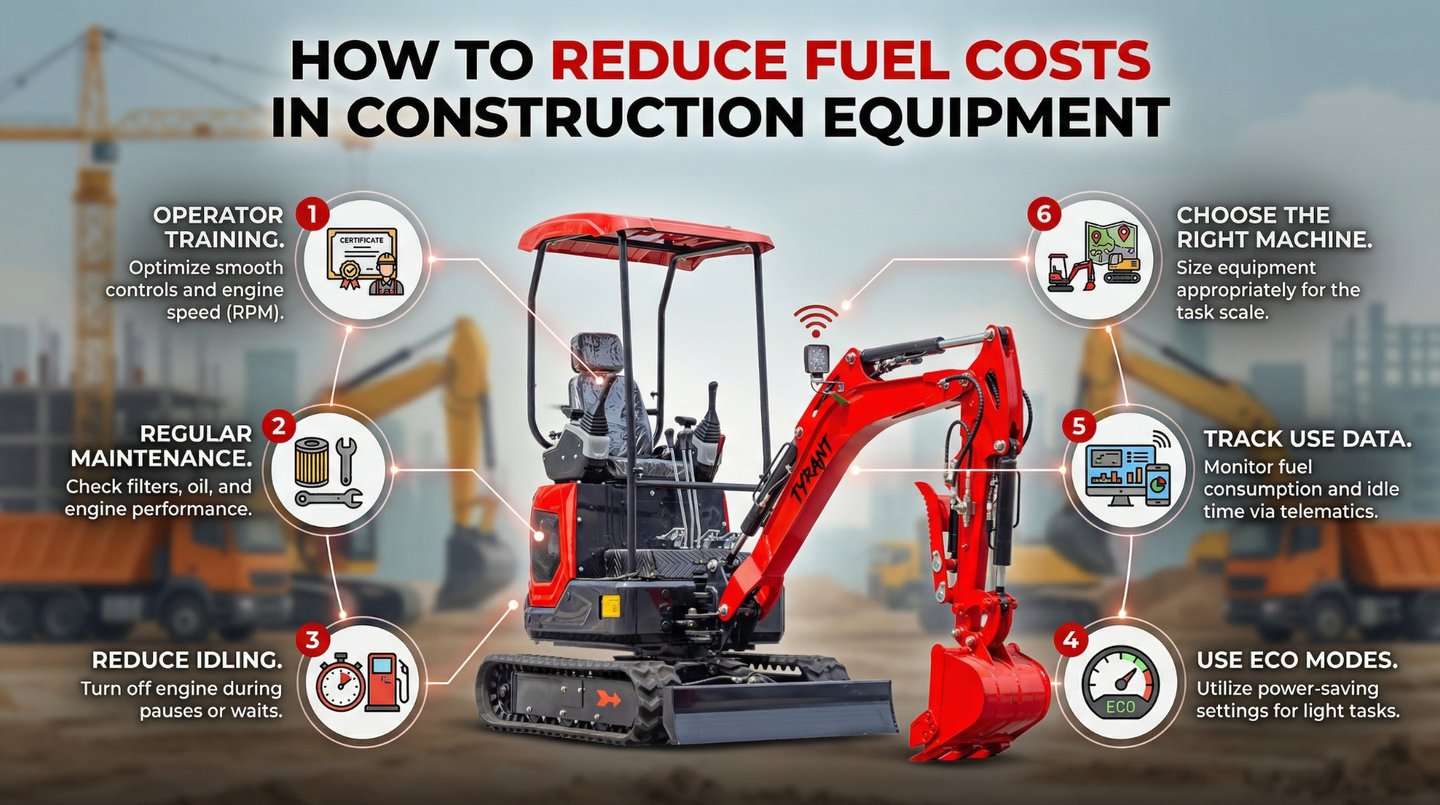
Fuel represents one of the largest ongoing expenses for any contracting business. When diesel prices fluctuate, your profit margins instantly feel the impact. While you cannot control the cost of fuel at the pump, you possess total control over how your heavy machinery consumes it on the job site. Implementing strategic fuel management practices directly protects your bottom line and strengthens your financial stability.
Many contractors accept high fuel bills as a standard cost of doing business. This mindset leaves thousands of dollars on the table every single month. By evaluating your daily operations and making targeted adjustments, you can drastically cut unnecessary diesel burn. You simply need the right combination of operator training, diligent maintenance, and modern technology.
This complete guide gives you useful, doable tips on how to cut down on the fuel that heavy machinery uses. We'll look at how learning how to use operator techniques, sticking to strict maintenance schedules, and using advanced telematics can save a lot of money on construction fuel costs. You will also learn how buying construction machines that use less fuel will give you a better return on your investment.
The Hidden Drain of Excessive Machine Idling
Idling stands as the single most destructive habit regarding job site fuel efficiency. A massive excavator sitting idle burns expensive diesel while generating absolutely zero revenue for your business. Experts estimate that heavy equipment spends up to 40 percent of its total operating time completely idle. Eliminating this wasted time instantly transforms your daily operating costs.
The True Cost of Idle Time
When a machine idles, it does more than just waste diesel fuel. It continuously racks up non-productive hours on the engine's internal components. This accelerates your preventative maintenance schedule, forcing you to pay for expensive oil changes and filter replacements much sooner than necessary.
Furthermore, excessive idling negatively impacts your machine's long-term resale value. Buyers look closely at the total engine hours when purchasing used equipment. If half of those hours come from the machine simply sitting parked with the engine running, you lose thousands of dollars in retained equity.
Implementing Auto-Idle Technology
Modern equipment manufacturers recognize the massive financial drain caused by idling. To combat this, they equip new machines with intelligent auto-idle features. This system actively monitors the operator's hydraulic joystick inputs. If the operator stops moving the controls for a few seconds, the machine automatically drops the engine RPM to a low-idle state.
When the operator touches the joysticks again, the engine instantly revs back up to the working RPM. If your current fleet features this technology, you must ensure your operators actually leave it turned on. Enforcing the use of auto-idle systems represents the easiest, fastest way to secure immediate construction fuel cost savings.
Master Efficient Operator Techniques
The person sitting inside the cabin holds the greatest influence over your daily fuel consumption. Aggressive, inexperienced operators burn significantly more diesel than smooth, highly trained professionals. Investing time into proper operator training yields a massive, ongoing return on investment for your business.
Practice Smooth Hydraulic Control
Jerky, erratic movements force the machine's hydraulic pumps to work substantially harder. When an operator slams the joysticks back and forth, the engine must constantly surge to meet the sudden demand for pressurized fluid. This surging burns excess fuel and causes massive wear and tear on the internal hydraulic seals.
You must train your crew to use smooth, deliberate control inputs. Fluid movements keep the engine operating at a highly consistent RPM, which requires far less diesel to maintain. Smooth operation also prevents material from spilling out of the bucket, eliminating the need to waste fuel cleaning up dropped dirt.
Optimize Job Site Travel Routes
Wheel loaders and articulated dump trucks burn a tremendous amount of fuel simply driving across the site. Poor job site planning frequently forces these machines to travel much further than necessary. You must design a logical, highly efficient layout before the heavy digging begins.
Establish clear, direct travel lanes between your material stockpiles and your primary loading zones. Ensure dump trucks can easily pull into the loading area without requiring the wheel loader to chase them down. By keeping travel distances as short as possible, you drastically reduce fuel consumption and heavy equipment burns during basic material transport.
Stick to Strict Preventative Maintenance
Mechanical degradation happens slowly, quietly robbing your heavy machinery of its raw power and efficiency. When you neglect routine maintenance, the engine must work twice as hard to deliver the same amount of pushing force. Implementing a strict preventative maintenance program guarantees your machinery always operates at peak fuel efficiency.
Maintain Clean Air and Fuel Filters
Construction sites generate massive amounts of thick, abrasive dust. This dust rapidly clogs the engine's primary air filters, starving the diesel engine of vital oxygen. When an engine cannot breathe properly, it compensates by dumping more raw fuel into the cylinders, destroying your daily efficiency.
You must adhere strictly to the manufacturer's recommended service intervals for all primary filters. Changing the air and fuel filters ensures clean, unrestricted combustion. When you prioritize clean filters, you maintain your machine's horsepower and prevent massive spikes in your weekly fuel expenses.
Proper Tire Inflation and Track Tension
The foundation of your machine directly impacts how much energy it requires to move. Operating a wheel loader with underinflated tires creates massive rolling resistance. The engine must burn significantly more diesel just to push the squishy tires across the hard dirt. You must check tire pressures weekly using a calibrated commercial gauge.
Similarly, running an excavator with tracks that are too tight places immense friction on the undercarriage components. The hydraulic drive motors must work overtime to overcome this physical resistance. Maintaining proper track tension allows the machine to glide smoothly, keeping your fuel costs firmly under control.
Leverage Advanced Telematics Technology
You cannot improve what you do not actively measure. Modern construction equipment features advanced digital telematics systems that monitor the engine's exact behavior and daily fuel consumption. These systems send detailed, real-time reports directly to your fleet manager's computer or smartphone.
Tracking Your Fuel Burn Rates
Telematics platforms allow you to see exactly how many gallons of diesel a specific machine burns per hour. You can compare this data across different operators and different job sites. If you notice a sudden spike in a machine's fuel consumption, you can immediately investigate the cause.
Perhaps the machine requires a new set of fuel injectors, or perhaps the operator needs additional coaching on proper loading techniques. Using hard data to drive your operational decisions ensures you catch fuel-wasting problems before they destroy your monthly budget.
Invest in Fuel-Efficient Construction Machines
When the time comes to expand or upgrade your fleet, fuel efficiency must sit at the top of your priority list. Manufacturers constantly engineer new technologies designed to maximize raw power while minimizing diesel consumption. Investing in fuel-efficient construction machines acts as a powerful hedge against rising energy costs.
Match the Machine to the Job
Overbuying remains one of the most common ways contractors waste fuel. Purchasing a massive 30-ton excavator to perform light residential utility work forces you to burn excess diesel every single day. You must carefully align your machinery acquisitions with the exact physical demands of your most frequent contracts.
Tailoring your fleet to your specific niche ensures your equipment operates within its optimal load range. A properly sized machine works efficiently, sips fuel, and delivers exceptional profitability on every single job.
Explore Advanced Powertrains
Many manufacturers now offer hybrid excavators and loaders that capture and reuse kinetic energy. When the upper structure of a hybrid excavator slows down from a swing, the system stores that energy and uses it to assist the engine during the next movement. These advanced powertrains easily deliver double-digit percentage savings on your total fuel costs.
While hybrid machines typically carry a higher initial purchase price, the massive reduction in daily operating costs creates a highly favorable payback period. As you plan your future fleet acquisitions, always calculate the long-term fuel savings into your total return on investment.
Secure Your Financial Future
Controlling your operating costs guarantees the long-term success and profitability of your contracting business. You now understand exactly how to reduce fuel costs in construction equipment through strategic planning and precise execution. By eliminating idle time, training your operators, and maintaining your fleet flawlessly, you secure massive construction fuel cost savings.
Take a moment to audit your current job site operations this week. Identify where operators might leave machines idling unnecessarily or where travel routes cause excessive driving. By implementing these authoritative fuel management strategies, you instantly lower your daily operating costs, protect your working capital, and deliver superior financial results for your company.
Conclusion
In the end, reducing fuel costs is not about relying on a single solution, but about building consistent, efficient habits across your entire operation. Every decision on the jobsite—from how long machines idle to how smoothly they are operated and how well they are maintained—has a direct impact on your overall fuel consumption. When these small improvements are applied consistently, they create meaningful and measurable savings over time.
It is also important to recognize that fuel efficiency is closely tied to how well your operation is managed as a whole. Proper planning, smart equipment selection, and the use of modern technologies like telematics give you better visibility and control over your fleet. This allows you to quickly identify inefficiencies, correct them early, and keep your machines running at peak performance without unnecessary waste.
As fuel prices continue to fluctuate, contractors who take a proactive approach will always have the advantage. By combining disciplined operator behavior, preventative maintenance, and data-driven decision-making, you are not only reducing costs—you are strengthening the financial foundation of your business. Over time, these strategies help you build a more resilient, efficient operation that can stay competitive, protect profit margins, and grow with confidence in any market condition.
TinyExcavator
Find mini excavator suppliers with reasonable prices and variety.
TYPHON Machinery Offices
2522 S Malt Ave. Commerce, CA 90040 United States
© 2025. All rights reserved.