10% Off Retail prices for our premium value mini excavators
How Fast Can a Mini Excavator Pay for Itself?
hinking of buying a mini excavator? Learn how quickly it can pay for itself through rental savings, increased productivity, and new job opportunities.
3/7/20265 min read
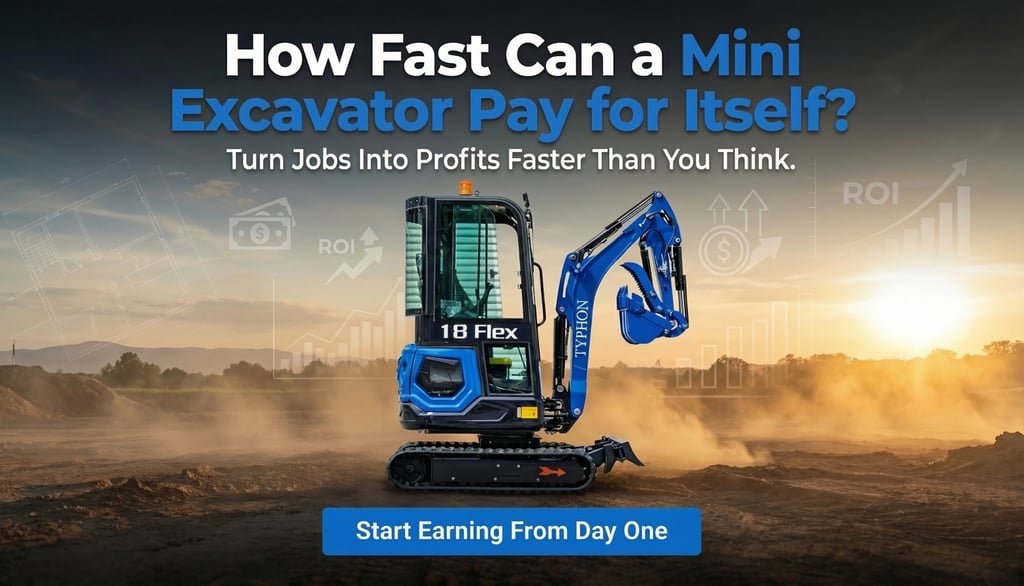
Purchasing a mini excavator represents a significant capital investment for any business, whether you're a seasoned contractor, a growing landscaping company, or a large-scale property owner. The initial price can feel daunting, leading many to question if ownership is truly worth it compared to renting. This is a critical question, and the answer lies in a clear-eyed analysis of your return on investment (ROI). A mini excavator isn't just an expense; it's a revenue-generating asset that can fundamentally change your business's efficiency and profitability.
Figuring out when a mini excavator actually pays for itself is about more than just crunching numbers on a spreadsheet. It’s not just "Price ÷ Hourly Rate." It’s about the relief of no longer paying rental fees, the extra jobs you can suddenly say "yes" to, and the hours of manual labor you’re finally saving your back.
In this guide, we’re moving past the dry accounting and looking at the real-world math of ownership. We’ll show you how to flip the script so that your machine stops looking like a monthly bill and starts feeling like the engine driving your business forward.
The True Cost of Renting
For many starting, renting seems like the logical choice. It requires no long-term commitment and avoids the costs of maintenance and storage. However, relying on rentals can quickly become a significant drain on your resources, creating hidden costs and logistical headaches that eat into your profit margins.
Let's consider a common scenario. A contractor needs a 1.5-ton mini excavator for a small trenching job. The daily rental rate might be around $300. If you add delivery and pickup fees, that can easily climb to $450 for a single day's work. A weekly rental might offer a better rate, perhaps around $1,000 plus delivery. If your business finds itself needing a machine for just two weeks out of every month, you are looking at an expenditure of over $2,000 per month, or $24,000 per year, on rental fees alone.
This calculation doesn't even account for the indirect costs. When you rent, your schedule is dictated by the rental yard's availability. If a project gets delayed by weather, you might end up paying for a machine that sits idle. Conversely, if you need a machine on short notice for an emergency job, one may not be available, forcing you to turn down profitable work. Owning the machine puts you in complete control of your schedule and availability.
Calculating the Breakeven Point
To determine how fast your mini excavator can pay for itself, we need to establish a baseline. Let's assume you purchase a quality 1.5-ton mini excavator for approximately $25,000. Using our conservative rental cost estimate of $2,000 per month, the simple math suggests the machine would pay for itself in just over 12 months based on rental savings alone.
The real magic happens when you look at your daily workflow. When you own the machine, it’s there at 6:00 AM, ready when you are. You’re not stuck on the phone chasing a delivery driver or rushing to clean the bucket before the rental yard closes at 5:00.
Think about those "while you're here" moments. If a client asks you to rip out a stubborn stump or level a small patch of dirt, you can just do it. With a rental, you’d probably grab a shovel to avoid another $300 daily fee—and your back would pay for it later.
Let’s do the math on a typical patio job: If having that mini excavator on-site saves a three-person crew just two hours of heavy lifting a day, you’re looking at $300 in saved labor. That’s basically your "rental fee" staying in your own pocket while your team finishes the job faster and goes home less exhausted
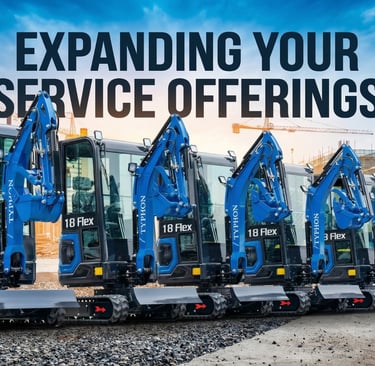
Expanding Your Service Offerings
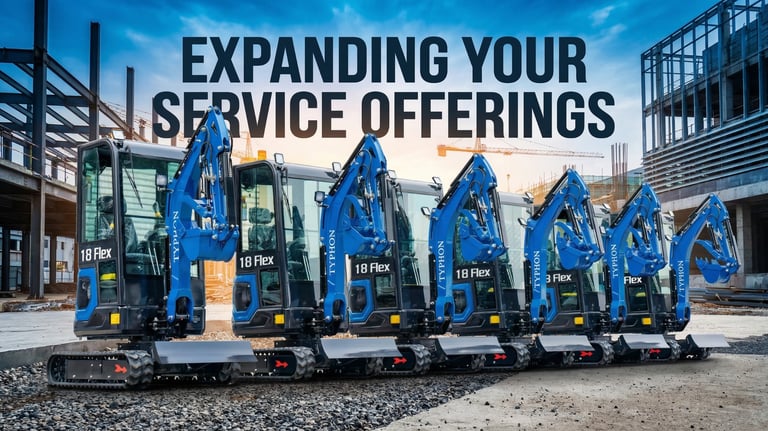
Ownership does more than just save you money on existing jobs, it empowers you to take on entirely new types of work. A mini excavator is a versatile tool platform. With the right attachments—such as an auger, a hydraulic breaker, or a grapple—you can dramatically expand your company's capabilities.
Suddenly, your landscaping business isn't just mowing lawns and planting shrubs. You can now offer services like fence installation, small-scale demolition, foundation digging for sheds and additions, or drainage system installation. Each of these services commands a higher price point than basic landscape maintenance.
For example, drilling a dozen holes for deck footings with an auger attachment might take an hour with the machine but would take half a day of back-breaking manual labor. You could reasonably charge $500 to $800 for that service. Completing just one or two of these small, high-margin jobs each month can generate an additional $1,000 to $1,500 in revenue. This new income stream directly accelerates the machine's ROI, shortening the payback period even further. The machine isn't just saving you money; it is actively generating new revenue that was previously inaccessible.
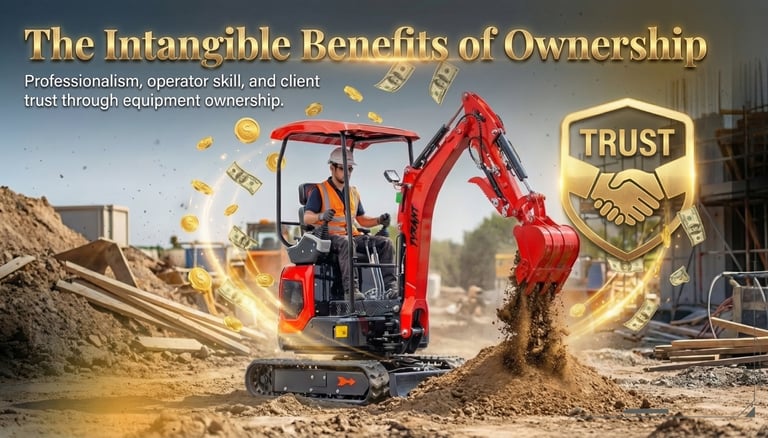
The Intangible Benefits of Ownership
Beyond the hard numbers, owning a mini excavator offers powerful intangible benefits. It projects an image of professionalism and capability to your clients. When you arrive at a job site with your own well-maintained equipment, it signals that you are a serious, established business, which can be a deciding factor for clients choosing between you and a competitor.
Furthermore, operator proficiency increases dramatically. When your crew uses the same machine every day, they develop a deep familiarity with its controls and capabilities. They learn its limits and how to perform tasks with greater speed and precision. This reduces the risk of accidents and damage that can occur when using unfamiliar rental equipment. This mastery translates into faster job completion, higher quality work, and ultimately, greater client satisfaction.
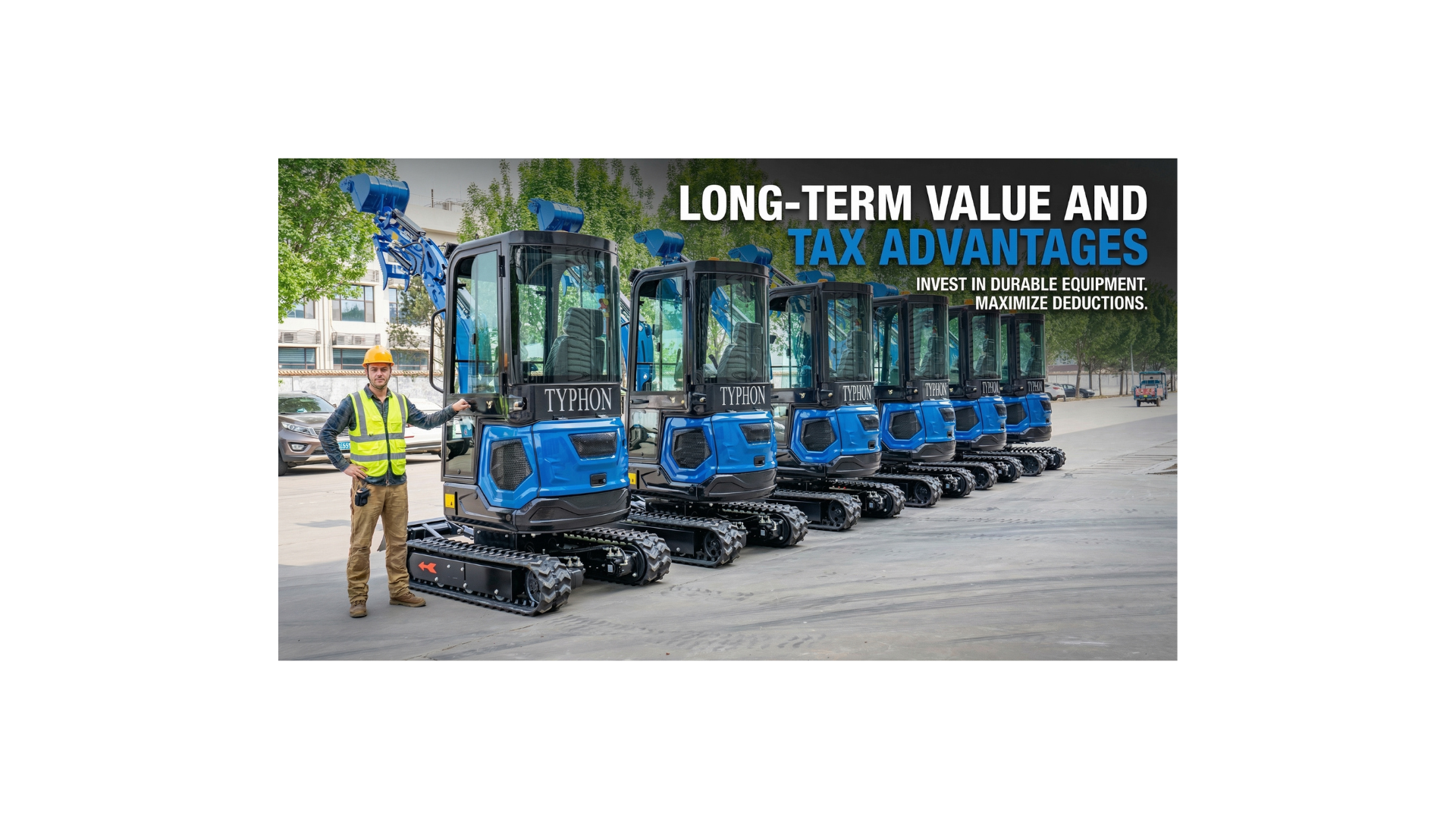
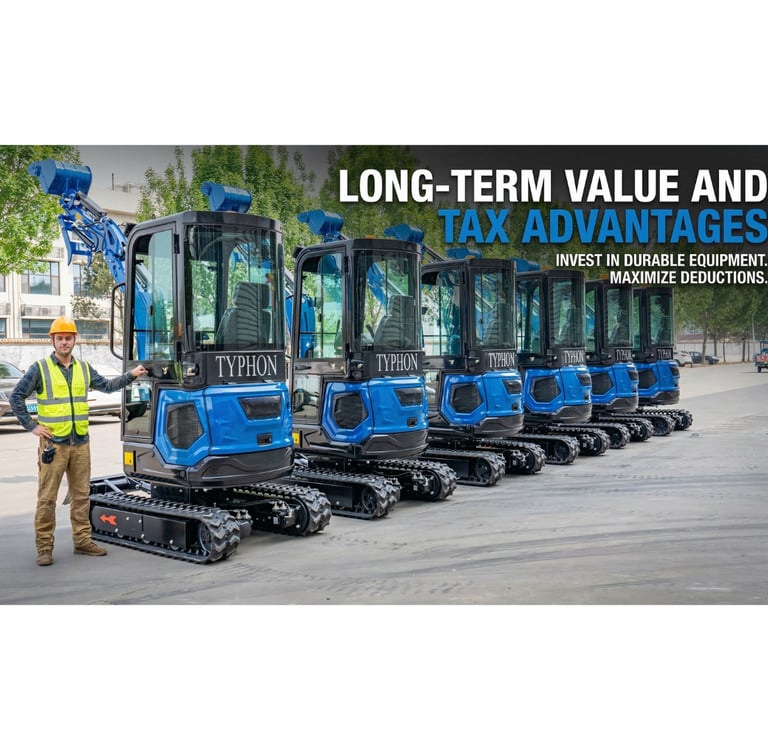
Long-Term Value and Tax Advantages
While the initial purchase is a significant outlay, a mini excavator is an asset that retains value. Well-maintained machines from reputable brands have strong resale markets. After several years of service, you can often recoup a substantial portion of your initial investment, lowering the total cost of ownership significantly.
Additionally, there are considerable tax advantages to consider. Under Section 179 of the U.S. tax code, businesses can often deduct the full purchase price of qualifying new or used equipment from their gross income in the year it is placed into service. This can result in a substantial tax saving that effectively reduces the net cost of the machine. Always consult with a tax professional, but this deduction can dramatically improve the ROI calculation.
Conclusion
So, how fast can a mini excavator pay for itself? For a busy contractor using it regularly, the answer is often surprisingly quick—typically within 12 to 18 months when you factor in rental savings, labor efficiency, and new revenue streams. By eliminating rental fees, you are turning a major business expense into a capital investment. By increasing productivity, you are completing jobs faster and fitting more work into your schedule. By expanding your services, you are opening up new, profitable markets.
The decision to purchase a mini excavator is a move toward greater independence, efficiency, and profitability. It puts you in control of your projects, your schedule, and your company's growth potential. When you look beyond the price tag and analyze the comprehensive financial impact, you’ll find that a mini excavator isn't just a machine that digs dirt; it's a machine that builds your business.
TinyExcavator
Find mini excavator suppliers with reasonable prices and variety.
TYPHON Machinery Offices
2522 S Malt Ave. Commerce, CA 90040 United States
© 2025. All rights reserved.