10% Off Retail prices for our premium value mini excavators

Exploring Different Mini Digger Bucket Types
Discover various mini digger bucket types and their uses. Learn which bucket suits your digging, grading, or trenching tasks for maximum efficiency.
MINI DIGGER BUCKET
10/17/20255 min read
Exploring Mini Digger Bucket Varieties
In the world of compact construction, your equipment is only as versatile as the attachments you pair with it. If you own a mini excavator, you already know that these nimble machines are the backbone of modern landscaping, utility work, and residential construction.
However, to truly unlock the potential of your Typhon Machinery fleet, understanding Mini Digger Bucket Varieties is essential.
Choosing the right bucket isn’t just about the width; it’s about matching the tool to the terrain, the material, and the specific demands of the job site.
In this comprehensive guide, we will explore the different types of compact construction buckets available, how they enhance the performance of Typhon mini excavators, and how to select the perfect one for your next project.
Why Bucket Choice Matters for Mini Excavators
A mini excavator is designed for precision and power in tight spaces. Typhon Machinery, known for its robust and reliable compact equipment, engineering machines like the Terror XI and Terror XVIII to handle a variety of stresses. However, using the wrong bucket can lead to:
Decreased Fuel Efficiency: Forcing a wide bucket through heavy clay strains the engine.
Reduced Stability: Overloading the machine with a bucket that is too large for its tonnage can cause tipping.
Premature Wear: Using a general-purpose bucket for rock work will dull teeth and crack welds.
By mastering the various Mini Digger Bucket Varieties, you ensure your machine operates within its "sweet spot," maximizing both lifespan and ROI.
1. General Purpose (Digging) Buckets
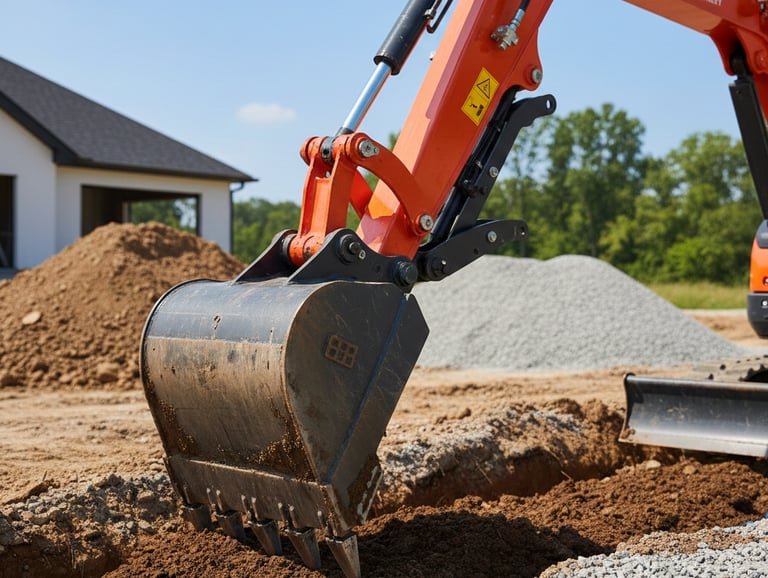
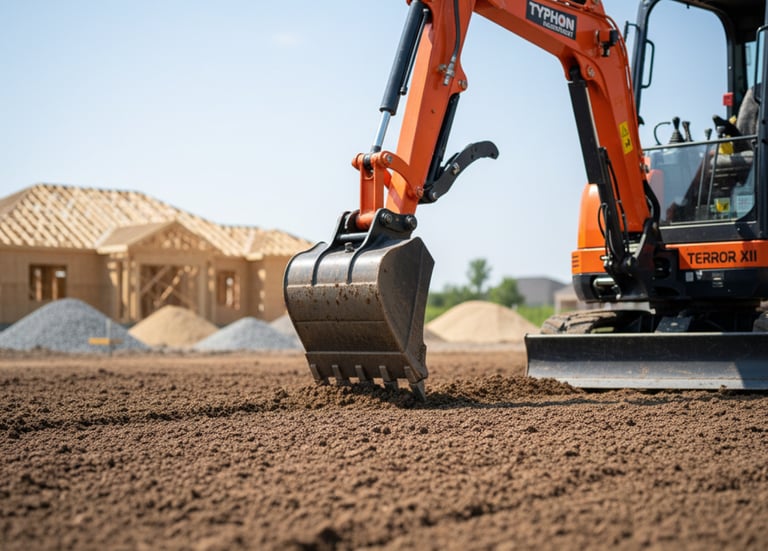
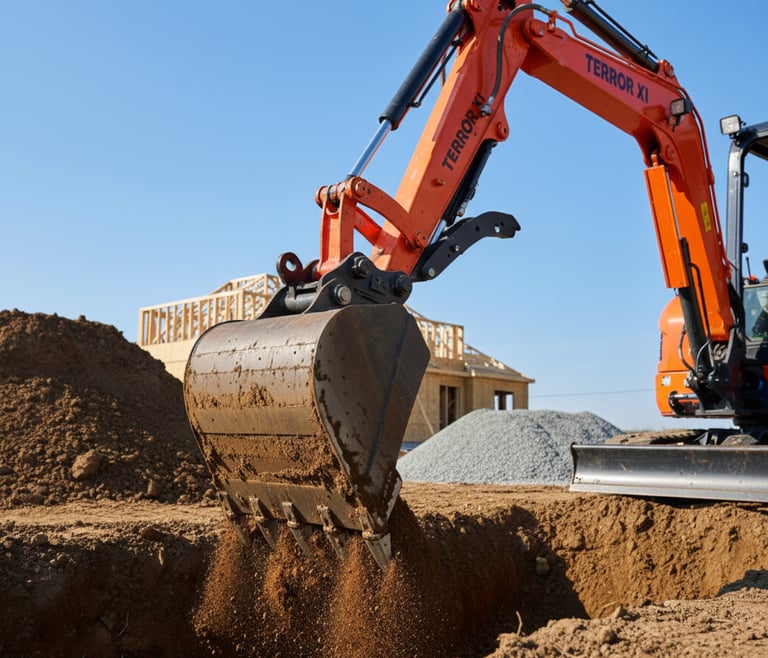
The General Purpose (GP) bucket is the standard-issue attachment for most mini diggers. It is the "jack-of-all-trades" designed for everyday earthmoving tasks.
Key Features:
Teeth: Usually equipped with 3 to 5 replaceable teeth for soil penetration.
Design: A moderate bucket depth and curve to balance breakout force and capacity.
Best For: Topsoil, loam, loose dirt, and light gravel.
Typhon Machinery Spotlight: Typhon’s standard 400mm and 500mm digging buckets are crafted from high-strength alloy steel, ensuring they can handle the daily rigors of trenching and site prep without warping.
2. Trenching Buckets (Narrow Buckets)
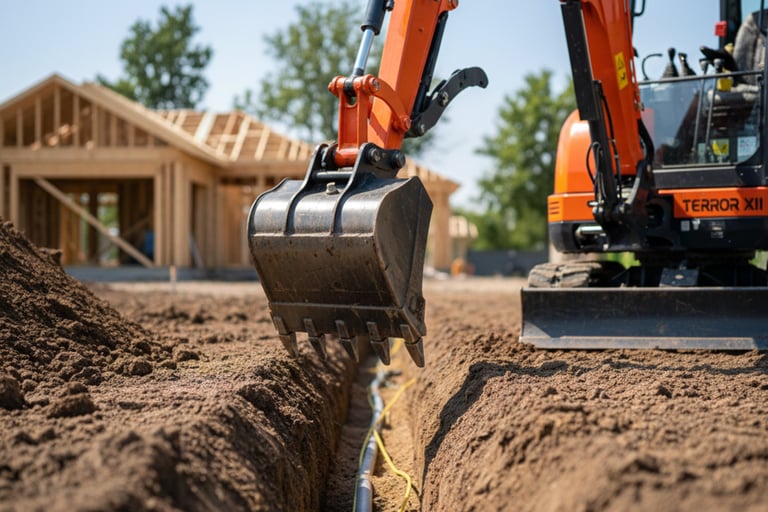
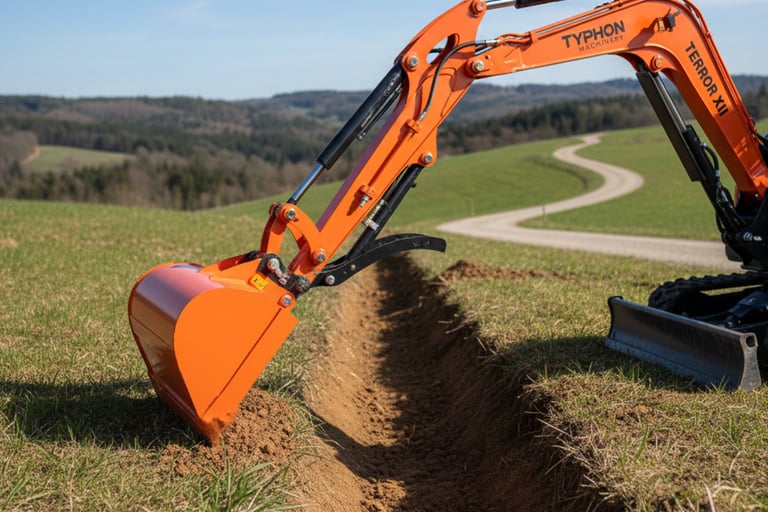
When precision is required for utility lines, pipes, or footings, the trenching bucket is the go-to variety. These are much narrower than standard buckets.
Key Features:
Width: Ranges from 200mm (8 inches) to 300mm (12 inches).
Profile: Deep and narrow to reach required depths while minimizing the amount of material removed.
Best For: Laying electrical conduit, fiber optics, or water pipes.
Efficiency Tip: Using a narrow 200mm trenching bucket on a Typhon Terror XI allows you to dig precise channels without disturbing the surrounding soil, saving hours of backfilling time.
3. Grading and Ditching Buckets
Also known as mud buckets or finishing buckets, these varieties are wide and lack teeth. Their primary purpose isn't to break hard ground, but to move loose material and create a smooth finish.
Key Features:
Flat Cutting Edge: A smooth, straight edge instead of teeth.
Width: Often 800mm to 1000mm wide for compact construction buckets.
Best For: Leveling soil, cleaning out ditches, backfilling, and landscaping slopes.
Typhon Machinery Spotlight: The Typhon 1000mm Leveling Bucket is a favorite among landscapers. It allows for the rapid "shaving" of a site to achieve a perfectly flat grade for turf or paving.
4. Hydraulic Tilting Buckets
For complex grading and sloping, a fixed bucket often falls short. Tilting buckets take the grading bucket design and add a hydraulic actuator, allowing the bucket to tilt 45 degrees in either direction.
Key Features:
Maneuverability: Adjust the angle of the cut without moving the entire excavator.
Versatility: Ideal for V-shaped ditches and angled embankments.
Best For: Roadside maintenance, specialized landscaping, and working on uneven terrain.
Technical Spec: Typhon’s 600mm and 800mm Tilting Buckets feature a universal pin size ($\phi25 \times 160$), making them compatible not just with Typhon machines but with most mini excavators under 3 tons.
5. Skeleton (Sieve) Buckets
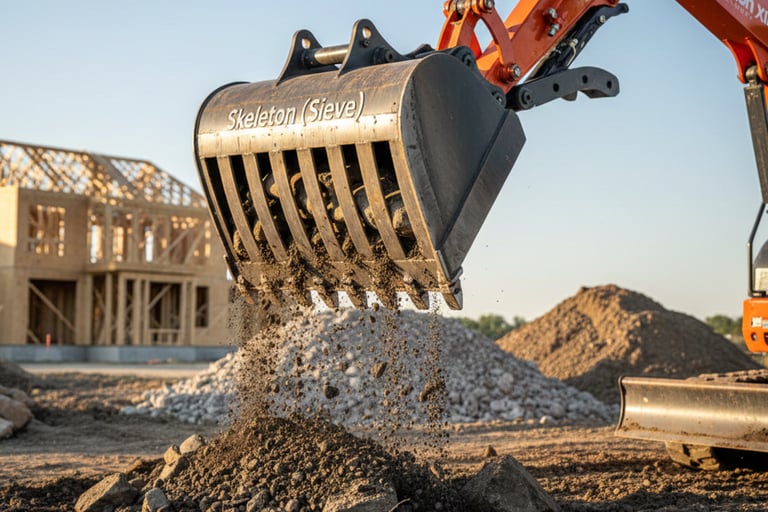
If your job site is a mix of soil and debris, a skeleton bucket is an invaluable asset. It looks like a standard bucket but features slats or a heavy-duty mesh at the back.
Key Features:
Separation: Soil and fines fall through the gaps, leaving rocks and debris in the bucket.
Efficiency: Allows for "on-site" sorting of materials.
Best For: Land clearing, orchard work, and recycling stone from excavated earth.
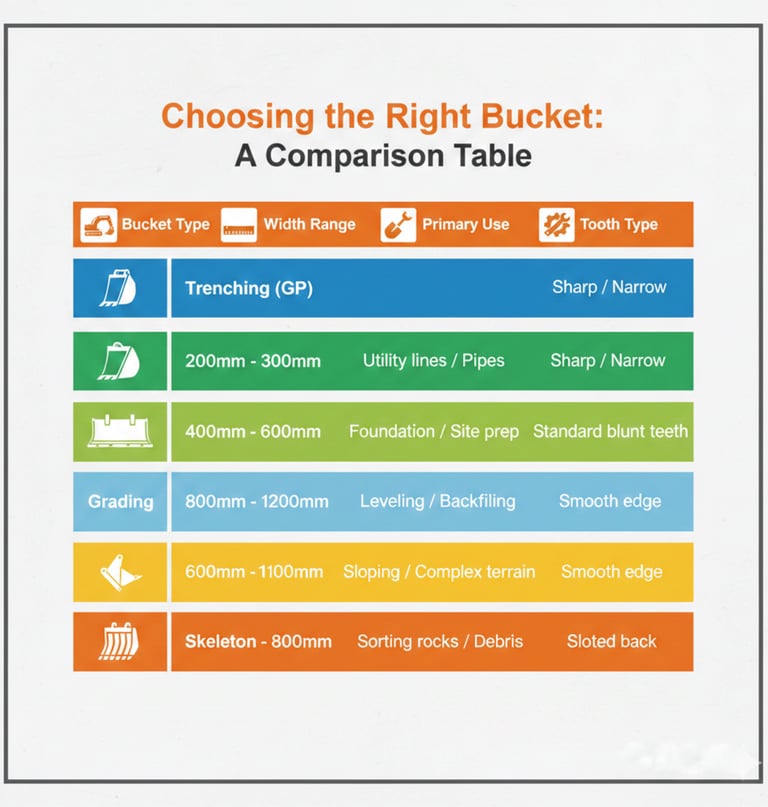
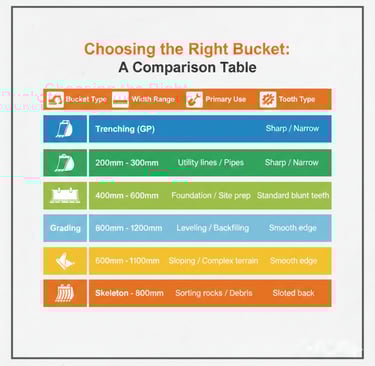
Choosing the Right Bucket: A Comparison Table
To help you decide, here is a quick reference guide based on common Typhon Machinery applications:
Critical Factors When Selecting Your Bucket
Before you click "buy" on a new attachment, consider these three critical factors:
1. Soil Density and Hardness
The harder the soil, the smaller the bucket should be. For compacted clay or rocky ground, a narrow, heavy-duty bucket with sharp teeth provides the necessary breakout force. If you are working in soft sand or loose topsoil, a wider bucket will increase your productivity.
2. Machine Tonnage and Balance
Every mini excavator has a lift capacity. A bucket that is too heavy (especially when full of wet mud) can put excessive stress on the boom and hydraulic cylinders.
Note: For Typhon machines in the 1-ton to 2.5-ton range, always check the pin diameter and span to ensure a secure fit. Most Typhon attachments use a standard 25mm pin.
3. Pin Dimensions (The "Fit" Test)
Mini excavator buckets are not universal across all brands. To ensure your Typhon Machinery attachment fits, you must verify:
Pin Diameter: Usually 25mm for small units.
Pin Center-to-Center: The distance between the two pins on the bucket.
Dipper Gap: The internal width of the bucket hangers.
Maintenance Tips for Your Buckets
To get the most out of your Mini Digger Bucket Varieties, follow these maintenance steps:
Inspect Teeth Regularly: Dull teeth increase fuel consumption and slow down digging. Replace them before they wear down to the bucket shank.
Check for Cracks: Inspect weld points, especially on the corners and the "ears" (hangers).
Grease the Pins: If you are using a tilting bucket, ensure the hydraulic pivot points are greased daily to prevent seizing.
Conclusion
Understanding the nuances of Mini Digger Bucket Varieties transforms your mini excavator from a simple digging machine into a multi-functional powerhouse. Whether you are carving out a narrow trench with a Typhon trenching bucket or finishing a backyard grade with a tilting bucket, the right tool makes the job easier, faster, and more profitable.
Typhon Machinery offers a full ecosystem of attachments designed specifically for the weight classes of compact machines. Investing in a diverse "bucket kit" is the fastest way to expand your service offerings and tackle more complex projects with confidence.
TinyExcavator
Find mini excavator suppliers with reasonable prices and variety.
TYPHON Machinery Offices
2522 S Malt Ave. Commerce, CA 90040 United States
© 2025. All rights reserved.