10% Off Retail prices for our premium value mini excavators

Compact Excavator Guide: What It Is, How It Works, and What to Check Before Buying
Learn what a compact excavator is, how it works, common uses, key features, size options, attachments, and what to check before buying one.
4/24/20265 min read
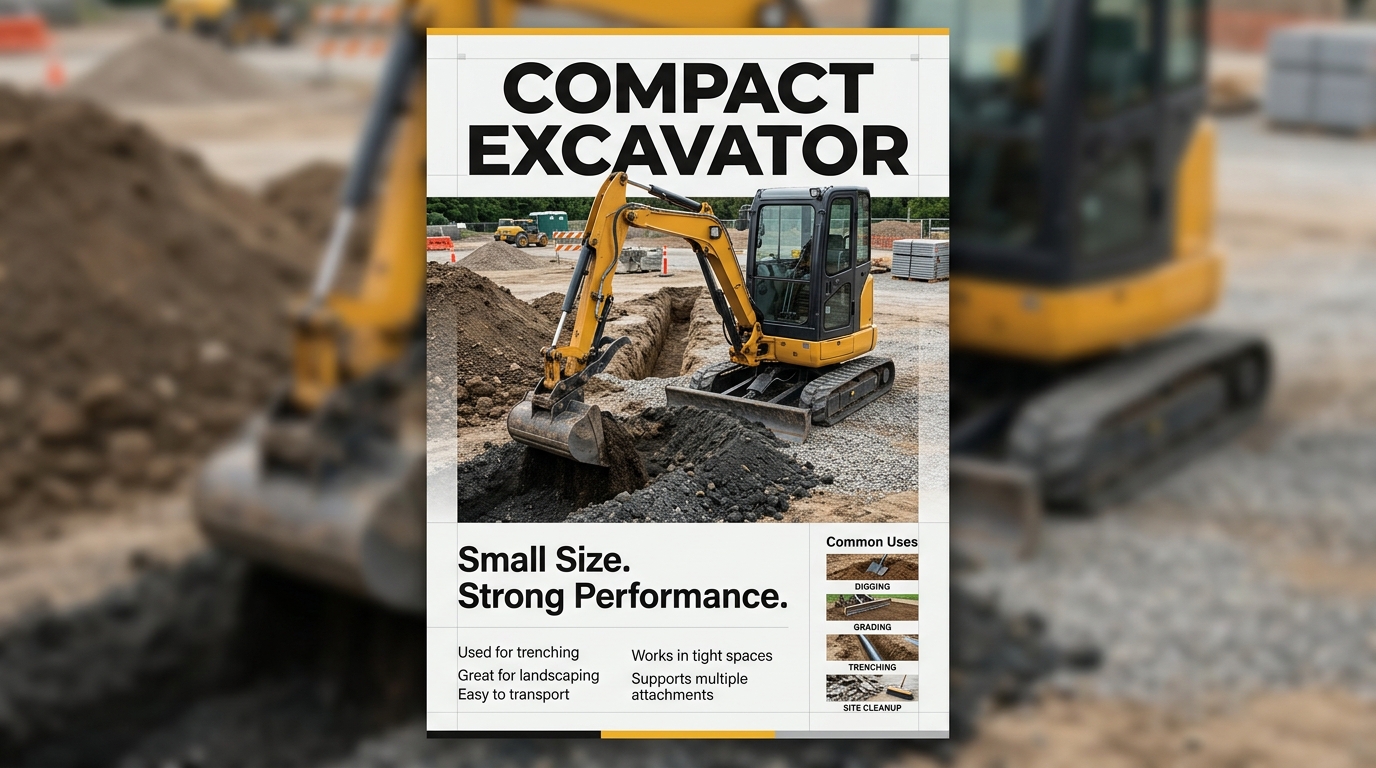
A compact excavator is a small digging machine built for jobs where a full-size excavator is too large or too expensive to use. It is commonly used for digging, trenching, grading, landscaping, small demolition, farm work, utility work, and construction tasks in tight spaces.
For buyers, operators, and business owners, the main value of a compact excavator is simple: it gives strong digging power in a smaller machine. It can work near buildings, inside narrow job areas, around homes, and on smaller sites where larger equipment may not fit.
What Is a Compact Excavator?
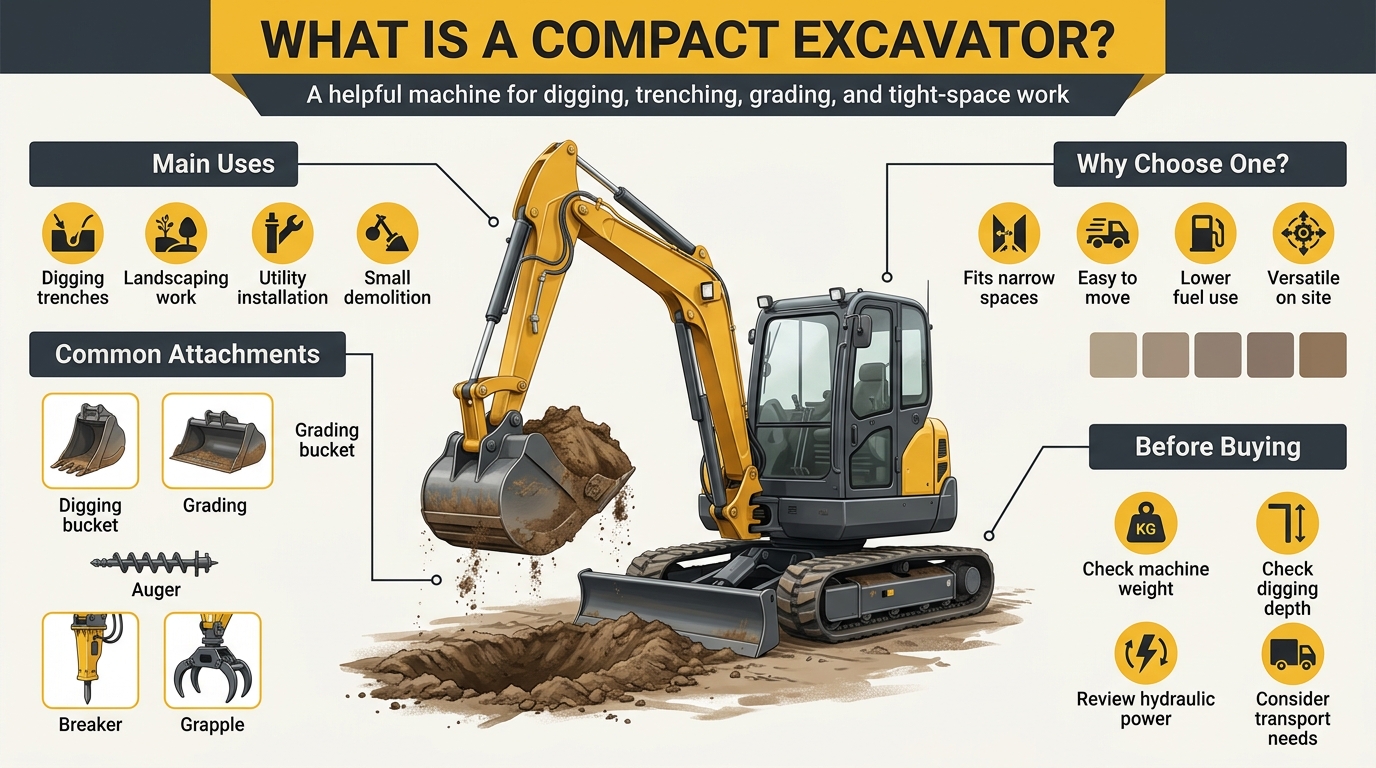
A compact excavator, also called a mini excavator, is a tracked or wheeled machine with a boom, arm, bucket, cab or canopy, hydraulic system, and rotating upper body. The machine can dig, lift, scrape, trench, and handle different attachments depending on the job.
Most compact excavators are smaller than standard excavators. This makes them easier to transport, easier to store, and easier to operate in limited space. Many models can be moved using a trailer, depending on the machine weight and local transport rules.
The main parts include the undercarriage, engine, hydraulic pump, boom, arm, bucket, swing system, and operator station. The hydraulic system is especially important because it controls digging force, lifting power, attachment use, and machine response.
Why Compact Excavators Are Useful on Smaller Jobsites
A compact excavator is useful because it can work where bigger machines may cause problems. On residential sites, road edges, farms, gardens, and small construction areas, space is often limited. A large excavator may be too heavy, too wide, or too difficult to move around.
Compact machines reduce that problem. They can fit through tighter access points, work closer to walls or fences, and cause less ground damage when used correctly. This is helpful for landscaping, drainage work, utility installation, and property improvement jobs.
Another benefit is lower running cost. A smaller machine usually uses less fuel, costs less to transport, and may be easier to maintain than a larger excavator. For small contractors or rental businesses, that can make the machine easier to manage.
Common Jobs a Compact Excavator Can Handle
A compact excavator can handle many daily jobsite tasks. The most common use is digging. This includes foundation digging, trenching for pipes, drainage channels, cable lines, irrigation systems, and small construction projects.
It can also be used for grading and leveling when fitted with the right bucket or blade. Many compact excavators come with a front dozer blade, which helps push soil, backfill trenches, and stabilize the machine during digging.
For landscaping, the machine can remove tree roots, shape ground, dig ponds, prepare garden areas, and move soil. On farms, it can help with ditch cleaning, fence post digging, small land clearing, and material handling.
With the right attachment, it can also do light demolition, drilling, breaking concrete, and grabbing materials. This makes the compact excavator more than just a digging machine.
Key Features to Check Before Choosing One
Before choosing a compact excavator, start with digging depth. This tells you how deep the machine can dig. If the job involves drainage, foundations, or utility trenches, digging depth matters a lot.
Next, check operating weight. A heavier machine usually gives better stability and digging power, but it may be harder to transport. A lighter machine is easier to move and better for soft ground, but it may not handle heavy digging as well.
Hydraulic performance is also important. Good hydraulic flow and pressure help the machine dig smoothly and run attachments properly. If you plan to use breakers, augers, grapples, or other hydraulic tools, do not ignore this part.
Cab comfort should also be considered. A clear display, comfortable seat, simple controls, good visibility, and easy entry can make a big difference during long working hours. A machine that feels easy to control is usually safer and more productive.
Also check service access. Filters, grease points, engine covers, hydraulic parts, and daily inspection points should be easy to reach. A machine that is hard to service often gets neglected.
Compact Excavator Sizes and Working Capacity
Compact excavators come in different sizes. Smaller models are easier to move and better for tight access, while larger compact models offer more digging force, reach, and lifting capacity.
A very small compact excavator may be useful for garden work, indoor demolition, narrow paths, and light trenching. A mid-size compact excavator is better for general construction, landscaping, drainage, and small business use. A larger compact excavator can handle deeper digging, heavier buckets, and more demanding tasks.
Do not choose based only on size. Match the machine to the work. A machine that is too small may struggle and waste time. A machine that is too large may cost more to transport, use more fuel, and become difficult to operate on smaller sites.
The best choice usually depends on digging depth, access width, soil type, lifting needs, transport method, and the attachments you plan to use.
Attachments That Make the Machine More Useful
One reason a compact excavator is popular is attachment flexibility. The standard bucket is good for digging, but other attachments can make the machine useful for many more jobs.
Common attachments include trenching buckets, grading buckets, hydraulic breakers, augers, rippers, grapples, thumbs, and tilt buckets. A trenching bucket is useful for narrow digging. A grading bucket is better for leveling and cleaning surfaces. A breaker can help with concrete and rock. An auger is useful for drilling holes for posts, trees, or foundations.
Before buying attachments, check the machine’s hydraulic flow, coupler type, weight limit, and pin size. Not every attachment fits every machine. Using the wrong attachment can reduce performance or damage the machine.
A quick coupler can also save time if the operator changes attachments often. For contractors handling different job types, this can make the machine much more practical.
Basic Maintenance and Operating Tips
A compact excavator needs regular maintenance to stay reliable. Daily checks should include engine oil, coolant, hydraulic oil, fuel level, track condition, grease points, hoses, bucket pins, and visible leaks.
Tracks should be kept at the correct tension. Loose tracks can come off during operation, while tracks that are too tight can wear faster. The undercarriage should also be cleaned often, especially after working in mud, sand, or wet soil.
Operators should avoid forcing the machine beyond its capacity. Lifting too much weight, digging at poor angles, or using the bucket like a hammer can damage the boom, arm, bucket, pins, and hydraulic parts.
Safe operation also matters. Work on stable ground when possible, keep the blade positioned correctly for support, avoid swinging loads near workers or buildings, and always check the area before digging. Underground pipes, cables, and soft ground can create serious problems if ignored.
Final Thoughts
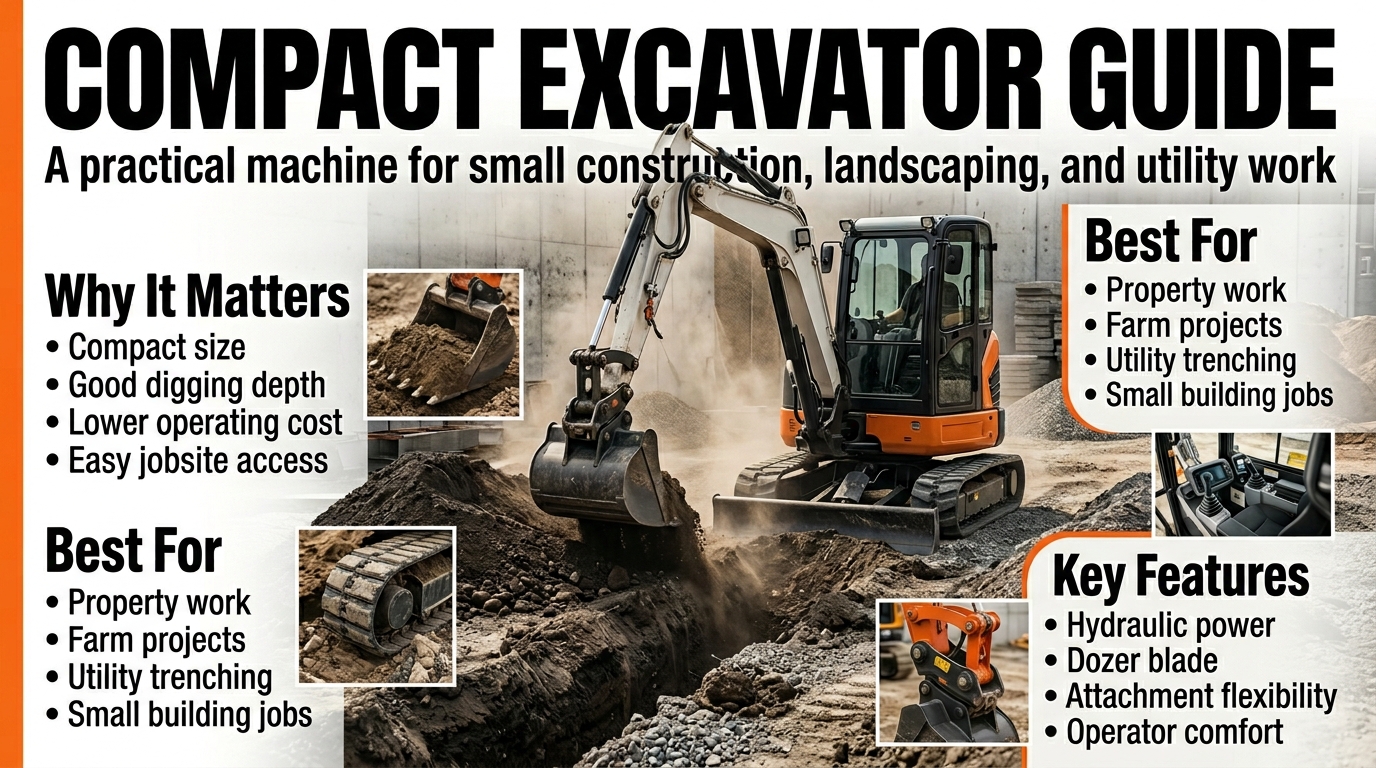
A compact excavator is a practical machine for digging, trenching, grading, landscaping, small construction, and many other jobs. It is small enough for tight spaces but strong enough for real work when matched with the right size and attachment.
Before buying one, check the digging depth, operating weight, hydraulic power, attachment options, transport needs, and maintenance access. The right compact excavator should fit the job, not just look good on paper.
TinyExcavator
Find mini excavator suppliers with reasonable prices and variety.
TYPHON Machinery Offices
2522 S Malt Ave. Commerce, CA 90040 United States
© 2025. All rights reserved.